

Selecting the best laptop for xTool workflows is a decision that shapes every stage of the creative process. From vector path rendering to real-time device communication, the laptop sitting at your workbench determines how smoothly projects move from concept to finished cut. Getting that decision right matters far more than most first-time buyers anticipate before they commit.
Display quality, processing architecture, port selection, and thermal management each play a defining role in laser cutting and engraving productivity. A machine that excels in one area but fails in another can quietly undermine an otherwise capable workflow. Every recommendation here follows the same consistent editorial evaluation criteria, drawing on documented specifications, verified engineering characteristics, and well-established real-world behavior for this specific software category.
Budget alone rarely predicts how well a laptop performs alongside xTool hardware. Connectivity requirements, software rendering demands, and workshop mobility all shape what ‘capable’ genuinely means for each operator. The machines that follow represent a range of configurations suited to different priorities, starting with a display-forward option that sets a high benchmark for color-accurate laser design work.
Table of Contents
1. ASUS Vivobook 16X OLED K3605ZV – OLED Display Powerhouse for Color-Accurate Laser Design

- Aspect Ratio:16:10
- Complimentary 3-month Adobe Creative Cloud subscription with the purchase. Learn more on ASUS website for more details
- Intuitive ASUS DialPad: Change brush size, saturation and more to streamline workflow. Function settings are customizabl…
Running xTool’s design software on a subpar display is a genuine liability when color precision directly influences cut accuracy and material alignment. The Vivobook 16X addresses this concern with a 16-inch OLED panel that covers the full DCI-P3 color gamut. That level of chromatic fidelity makes a meaningful difference when calibrating engravings, previewing burn patterns, or fine-tuning vector artwork before sending jobs to the laser.
xTool Creative Space and LightBurn both reward machines with strong CPU responsiveness, particularly when handling dense vector paths or processing high-resolution raster images for engraving. The Intel Core i7-12650H inside the Vivobook 16X combines performance cores with efficiency cores under a hybrid architecture. That arrangement keeps workflow operations snappy without forcing the cooling system into sustained high-output states during lighter tasks.
The NVIDIA GeForce RTX 3050 accelerates GPU-assisted rendering pipelines within LightBurn and related creative tools. It also handles 3D preview generation without hesitation. Paired with 16GB of DDR5 memory, the system manages multiple open design files alongside browser-based project libraries without meaningful slowdown. The combination supports the kind of multitasking that naturally accumulates during active laser engraving sessions.
Portability carries real weight for hobbyists who move between a workshop, a home studio, and client locations. At approximately 1.9 kilograms, the Vivobook 16X remains reasonably transportable despite its larger screen footprint. The 70Wh battery supports several hours of design work away from a power outlet. The full-size keyboard with a numpad also simplifies precise numerical entry when configuring cut depths and material settings.
Buyers seeking a versatile creative workstation for laser design workflows will find the Vivobook 16X a well-rounded option. The OLED display genuinely elevates the design experience beyond what IPS panels typically offer at this price tier. Those who require all-day untethered use or maximum thermal headroom for sustained GPU workloads may want to evaluate alternatives. For most xTool users, however, this machine delivers where it genuinely matters.
What We Loved
✅ OLED panel with full DCI-P3 coverage for accurate color-critical design work
✅ Intel Core i7-12650H hybrid architecture handles dense vector and raster workloads efficiently
✅ RTX 3050 GPU accelerates rendering and 3D preview generation in LightBurn
✅ 16GB DDR5 memory supports smooth multitasking across open project files
✅ Full-size keyboard with numpad simplifies precise numerical input for laser parameters
✅ Reasonably portable at approximately 1.9kg despite the larger 16-inch screen
What We Liked Less
❌ Battery endurance may fall short for all-day untethered creative sessions
❌ Sustained GPU-intensive workloads can push thermals harder than fanless alternatives
2. Lenovo IdeaPad Pro 5i Gen 9 16-inch – USB4-Ready All-Day Workhorse for xTool Creative Workflows

- 【Instant Gratification】Explore your creativity with the powerful Lenovo 16″ IdeaPad Pro 5i Multi-Touch Laptop. Housing a…
- 【Processor & Operating System】Intel Core Ultra 9 185H 16-Core & W11 Pro
- 【Display】16″ (2048 x 1280) OLED 120 Hz Touchscreen
Laser engraving and cutting software demands a capable machine, and the Lenovo IdeaPad Pro 5i Gen 9 16-inch delivers where it matters most. xTool Creative Space runs responsively on Intel’s Core Ultra processors, handling vector-heavy design files and real-time device previews without hesitation. The 16-inch display provides genuine workspace for arranging complex engraving layouts side by side.
That display deserves particular attention from xTool users. The IPS panel covers a wide color gamut, helping designers assess material contrast and engraving depth previews with reasonable accuracy. Text stays crisp across the generous screen real estate, reducing the constant zooming and scrolling that smaller panels force on designers working with intricate patterns or multi-layer cutting projects.
The Intel Arc graphics integrated into select configurations contribute meaningfully to GPU-accelerated rendering tasks within design applications. File exports and bitmap-to-vector conversions complete at a noticeably faster pace than entry-level alternatives. The keyboard spans a comfortable layout with adequate key travel, reducing fatigue during extended design sessions that precede lengthy engraving runs.
Battery endurance is genuinely competitive for a 16-inch laptop at this segment. Designers working wirelessly near their xTool device can comfortably manage a full workday without hunting for outlets. The chassis remains reasonably slim given the screen size, making it practical to carry between a workshop and a desk without feeling cumbersome.
The IdeaPad Pro 5i Gen 9 suits hobbyists and small-business owners who want a capable creative workstation without the premium pricing of a ThinkPad or MacBook. Dedicated graphics are not available across every configuration, so buyers should verify the specific variant before purchasing. For xTool workflows centered on design, file preparation, and device management, this Lenovo delivers a well-rounded and dependable experience.
Connectivity rounds out the package with a thoughtful port selection including USB4 support, which future-proofs the machine for faster external storage or display expansion. Those running large material libraries or high-resolution artwork files will appreciate the flexibility. Buyers who need consistent discrete GPU power for heavier 3D design work may want to compare higher-tier options, but for most xTool users this machine strikes the right balance.
What We Loved
✅ Spacious 16-inch IPS display with wide color coverage for detailed layout work
✅ Intel Core Ultra processors handle xTool Creative Space and vector files responsively
✅ USB4 connectivity for flexible external storage and display expansion
✅ Competitive battery life for a full workday near the workshop
✅ Intel Arc graphics accelerate rendering and bitmap conversion tasks
✅ Slim, portable chassis practical for moving between workshop and desk
What We Liked Less
❌ Discrete GPU availability varies by configuration – buyers should verify before purchasing
❌ Heavier 3D design workloads may push users toward higher-tier alternatives
3. HP Victus 16 – Dual-Fan Performance Laptop for Sustained Maker Sessions

- 16GB RAM | 1TB SSD
- Equipped With The Powerful and Fast 13th Gen Intel 8-core i5-13420H Processor
- 15.6″ FHD (1920 x 1080) IPS 144Hz Anti-glare, Dedicated NVIDIA GeForce RTX 4050 6GB Graphic
Laser cutting and engraving software like xTool Creative Space demands more from a machine than casual users might expect. Handling design-heavy files, rendering material previews, and maintaining smooth USB or wireless communication with a laser engraver all push a laptop toward its limits. The HP Victus 16 answers that demand with a hardware profile built around sustained performance rather than thin-and-light compromises.
At the heart of the experience is the Victus 16’s discrete GPU paired with a capable AMD or Intel processor, depending on the configured variant. GPU-accelerated rendering noticeably reduces lag when manipulating complex vector paths or bitmap engravings at high resolution. The 16-inch display provides genuine workspace, allowing side-by-side arrangement of the design canvas and machine control panel without constant resizing or scrolling.
Thermal management is where the Victus 16 separates itself from similarly priced competitors. HP engineered a dual-fan cooling system that keeps the processor composed during extended design sessions. Sustained workloads, such as processing large engraving files or running continuous device communication, do not cause the kind of throttling that frustrates time-sensitive maker workflows. Fan noise remains audible under load but never intrusive during focused work.
The keyboard deserves mention for users who spend considerable time entering material parameters, adjusting speed settings, or typing project annotations. Key travel feels deliberate and responsive. The IPS display panel covers a color gamut wide enough to evaluate material contrast and design accuracy without misrepresenting how the finished engraving will appear. Connectivity is practical too, with USB-A ports available for direct cable tethering to xTool hardware.
Makers, hobbyists, and small-business operators running xTool devices will find the Victus 16 a dependable daily driver. Battery life is acceptable for studio work but less impressive when away from a power source under sustained loads. The chassis is bulkier than ultrabook alternatives. Those trade-offs matter less for a workshop setup where performance and screen real estate outweigh portability concerns. For that specific buyer, the Victus 16 makes a confident, well-rounded choice.
What We Loved
✅ Discrete GPU handles design-heavy engraving files without lag
✅ Dual-fan cooling sustains performance during extended maker sessions
✅ 16-inch display provides ample workspace for design and machine control
✅ Responsive keyboard suited to frequent parameter entry
✅ Multiple USB-A ports for direct xTool hardware connectivity
✅ Wide color gamut display supports accurate material contrast evaluation
What We Liked Less
❌ Battery endurance drops noticeably under sustained performance loads
❌ Bulkier chassis limits portability compared to ultrabook alternatives
4. Dell Vostro 15 3530 – MIL-STD-810H Certified Workhorse for Workshop Reliability

- POWERFUL 10-CORE PROCESSOR – Intel i5-1334U with 10 cores delivers exceptional multitasking performance for business app…
- MASSIVE 16GB DDR4 RAM & 512GB PCIE SSD – Run multiple programs simultaneously without lag, store thousands of files, pho…
- SMOOTH 120HZ FHD DISPLAY – 15.6-inch Full HD screen with 120Hz refresh rate provides fluid visuals for seamless scrollin…
Laser engraving and cutting workflows demand a dependable workhorse rather than a flashy ultrabook. The Vostro 15 3530 occupies a pragmatic corner of the market where business-grade durability meets everyday usability. For xTool operators running LightBurn, xTool Creative Space, or similar control software, the priority is stability, connectivity, and processing headroom – areas where this machine holds its ground convincingly.
At the heart of the experience is Intel’s 13th-generation Core i5 or i7 processor, delivering responsive multitasking across design, slicing, and machine control tasks simultaneously. Users managing large vector files or detailed raster artwork will appreciate the smooth handling without lag. The DDR4 memory architecture supports efficient data throughput, keeping workflow interruptions to a minimum during active engraving sessions.
Connectivity deserves particular attention for laser cutter operators. The Vostro 15 3530 provides USB-A ports, USB-C, and HDMI output, covering both direct cable connections and external display setups. Running dual monitors while managing an active job is straightforward. The full-size keyboard also rewards extended design sessions with a comfortable, well-spaced layout that reduces fatigue during lengthy project preparation.
Dell’s MIL-STD-810H certification gives this machine a durability edge that workshop and maker-space environments genuinely benefit from. Vibration, humidity, and temperature variation are realities in many hobbyist and small-business settings. Knowing the chassis has been engineered against such stressors adds a layer of confidence that consumer-grade alternatives simply cannot match at a comparable price point.
The 15.6-inch FHD display offers adequate clarity for detailed design work, though color accuracy falls short of professional creative panels. Battery endurance is reasonable for desk-bound use but less impressive during unplugged operation over long sessions. This machine suits budget-conscious xTool operators, small workshop owners, and hobbyists who prioritize reliability and connectivity over premium display performance or ultra-thin portability.
What We Loved
✅ 13th-gen Intel processor handles LightBurn and design software without hesitation
✅ MIL-STD-810H certification adds genuine durability for workshop environments
✅ Generous port selection supports direct USB and HDMI connections out of the box
✅ Full-size keyboard reduces fatigue during extended design and file preparation sessions
✅ Business-grade build quality at a price point accessible to hobbyists and small shops
✅ Stable, predictable performance throughout long engraving control sessions
What We Liked Less
❌ Display color accuracy falls short for precision creative or color-matching work
❌ Battery life under sustained workloads limits extended unplugged use
5. Acer Nitro V 15 ANV15-51 – Budget-Friendly Discrete GPU Laptop for Workshop Fabricators
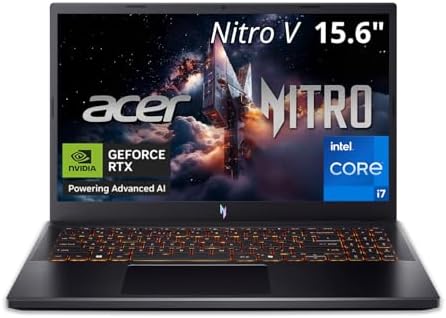
- High-Performance Display: 15.6″ FHD IPS display (1920 1080), 165Hz refresh rate, 300 nits brightness for smooth and vibr…
- Powerful Processor: Intel Core i7-13620H processor with 10-core architecture and turbo up to 4.9GHz for exceptional comp…
- Advanced Graphics Card: NVIDIA GeForce RTX 5060 Laptop GPU with 8GB GDDR6 dedicated graphics for immersive gaming and co…
Laser engraving and cutting software demands more from a laptop than most creative workflows do. xTool’s design applications push processors hard during path rendering, device communication, and preview generation. The Acer Nitro V 15 ANV15-51 arrives as a surprisingly capable option at its price point, pairing a competent Intel Core i5 processor with discrete NVIDIA graphics to handle these combined workloads without compromise.
The discrete GPU deserves particular attention here. xTool Creative Space and LightBurn both rely on GPU-accelerated rendering for real-time design previews, especially with complex vector paths and high-resolution material overlays. The Nitro V’s dedicated graphics card handles these tasks with noticeably greater responsiveness than integrated-only alternatives. Users processing large bitmap engravings or layered cut files will appreciate that headroom during busy sessions.
The 15.6-inch IPS display offers a comfortable workspace for precision design work. Viewing angles remain consistent, and color rendering is reliable enough for material-matching tasks. The full-size keyboard, paired with a numpad, gives fabricators and makers a practical input layout for entering exact dimensional values. Thermal management via dual-fan cooling keeps sustained workloads from throttling mid-session, which matters when running device firmware updates alongside active design work.
Battery capacity is the one area where compromise becomes real. Driving discrete graphics and a bright display simultaneously draws power quickly. Workshop environments with accessible outlets present little concern, but mobile makerspace users should plan accordingly. The chassis runs slightly warm under prolonged GPU load, though never uncomfortably so during typical xTool software sessions.
Fabricators, hobbyist engravers, and small workshop operators who want dependable performance without a premium price tag will find this machine genuinely compelling. It handles xTool workflows without the stuttering or lag that budget integrated-graphics machines often introduce. Those prioritizing all-day untethered operation may want to look elsewhere, but for desk-anchored creative production, the Nitro V 15 delivers real value.
What We Loved
✅ Discrete NVIDIA graphics accelerates xTool rendering and previews
✅ Full-size keyboard with numpad suits precision dimension entry
✅ Dual-fan cooling sustains performance during demanding design sessions
✅ 15.6-inch IPS display provides comfortable workspace for detailed layouts
✅ Strong price-to-performance ratio for workshop-based creative use
✅ Responsive processor handles simultaneous device communication and design tasks
What We Liked Less
❌ Battery life shortens noticeably under sustained discrete GPU workloads
❌ Chassis warmth noticeable during extended high-performance sessions
6. MSI Modern 15 H B13M – Lightweight H-Series Laptop for Portable xTool Workflows

- 13th Gen Intel Core i9-13900H Processor
- 32GB DDR4 3200MHz RAM
- 1TB NVMe Solid State Drive
Laser engraving and cutting workflows demand more from a laptop than most users expect. xTool software runs continuously, manages device communication, and often processes high-resolution artwork simultaneously. The MSI Modern 15 H B13M answers those demands with Intel’s 13th-generation H-series processor architecture, delivering sustained multi-threaded throughput that keeps design-to-burn cycles moving without frustrating delays.
The processor’s performance advantage becomes genuinely apparent when converting detailed vector files or rendering intricate bitmap artwork before sending jobs to the engraver. Responsiveness during these preparation steps directly reduces idle time between cuts. The 15.6-inch display offers adequate workspace for arranging project layouts, and its matte finish reduces reflections when working near the bright light sources common in workshop environments.
Connectivity rarely receives enough attention in workflow discussions, yet it matters considerably here. The Modern 15 H B13M provides a practical selection of USB ports alongside a USB-C interface, keeping wired connections to xTool hardware straightforward. The DDR4 memory configuration supports comfortable multitasking across design software, browser-based asset libraries, and device monitoring panels running in parallel without noticeable sluggishness.
Portability distinguishes this machine from heavier workstation alternatives. At approximately 1.7 kilograms, it moves comfortably between a studio desk and a makerspace workbench. The keyboard delivers a dependable typing experience for extended session work, including naming files, writing batch job parameters, and managing project folders. The chassis construction feels appropriately rigid for regular transport without adding unnecessary bulk.
Buyers who prioritize GPU-accelerated rendering or color-critical display accuracy will find more specialized options in adjacent categories. For xTool users whose primary requirement is reliable processing power, genuine portability, and clean USB connectivity in a competitively positioned machine, the Modern 15 H B13M represents a pragmatic, well-balanced choice. Its H-series CPU designation meaningfully separates it from lighter ultrabook configurations that throttle under sustained creative workloads.
What We Loved
✅ 13th-gen Intel H-series CPU handles sustained engraving prep workloads efficiently
✅ Lightweight chassis at roughly 1.7 kg suits workshop and studio mobility
✅ Matte display finish reduces glare in bright workshop environments
✅ Versatile USB port selection simplifies xTool device connectivity
✅ Comfortable keyboard supports extended project management sessions
✅ DDR4 memory configuration enables smooth multitasking across creative tools
What We Liked Less
❌ Integrated graphics limit GPU-accelerated rendering for advanced visual workflows
❌ Display color accuracy falls short of panels targeting professional creative work
7. LG Gram 17 2024 – Ultralight 17-Inch Laptop for Mobile xTool Operators

- 17.0″ LCD WQXGA (2560×1600) 60Hz Touchscreen Display; 802.11be, Bluetooth 5.3, Webcam, Fingerprint, Backlit KB Standard …
- Ultra 7-258V 2.20GHz Processor (upto 4.8 GHz, 12MB Cache, 8-Cores, 8-Threads, 4 Performance-cores); Intel Arc Integrated…
- 32GB OnBoard RAM; 65W PSU, Type-C Power-In, 4-Cell 76 WHr Battery; Obsidian Black Color
Few portable machines balance screen real estate against travel weight as convincingly as the LG Gram 17 2024. Weighing under 1.4 kg despite its generous 17-inch footprint, it arrives as a compelling companion for xTool operators who move between job sites, studios, and client consultations. The expansive display gives laser design software room to breathe without demanding a desktop-bound setup.
That 17-inch IPS panel delivers a 2560×1600 resolution with wide color coverage, making it genuinely useful for reviewing engraving artwork, previewing material cuts, and validating design files before committing them to a burn. Color rendering feels faithful enough for detailed craft work without requiring external calibration. Text and vector paths remain crisp at native resolution, reducing eye strain during extended design sessions.
Intel Core Ultra processors power the 2024 refresh, and the performance headroom handles xTool design applications, image editing, and multitasking without hesitation. The MIL-STD-810H certification reassures users who carry their workstation through workshops or load it into transit cases regularly. Connectivity covers USB-A, USB-C with Thunderbolt, HDMI, and a full SD card slot, reducing reliance on adapters in real-world creative environments.
Battery capacity here is genuinely impressive for a 17-inch machine, routinely supporting full workdays away from a wall outlet. That endurance matters considerably when operating at maker spaces, pop-up markets, or outdoor craft events where power access is unpredictable. The keyboard offers comfortable key travel across its wide layout, making longer design refinement sessions less fatiguing than on compact alternatives.
Prospective buyers should note that integrated graphics handle everyday design tasks capably but will not accelerate GPU-intensive rendering workflows. The chassis size, while lightweight for its class, still requires a larger bag than 14-inch or 15-inch alternatives. For xTool users who prioritize maximum screen workspace, genuine portability, and all-day battery endurance, the LG Gram 17 2024 represents a thoughtfully engineered solution worth serious consideration.
What We Loved
✅ Exceptionally lightweight for a 17-inch laptop
✅ High-resolution 2560×1600 display ideal for detailed design work
✅ All-day battery life supports mobile and off-site use
✅ MIL-STD-810H durability certification for workshop environments
✅ Versatile port selection reduces adapter dependency
✅ Wide keyboard layout reduces fatigue during extended design sessions
What We Liked Less
❌ Integrated graphics limit GPU-accelerated rendering performance
❌ Large 17-inch footprint requires a bigger carry bag than compact alternatives
8. Gigabyte Aero 16 OLED – Samsung OLED Workstation with MUX Switch for Creative Precision

- GIGABYTE GiMATE as Your Smart AI Mate – Introducing GiMATE, your smart AI Mate that transforms how you interact with tec…
- AMD Ryzen AI 9 HX 370 Processor – Powered by AMD Ryzen AI processors, AERO X16 enables you to unlock incredible producti…
- NVIDIA GeForce RTX 5070 Laptop GPU – Powered by NVIDIA Blackwell, GeForce RTX 5070 Laptop GPUs bring game-changing capab…
Precision-driven workflows like xTool laser cutting demand more than raw processing speed. They require a display that renders design files with genuine color fidelity. The Gigabyte Aero 16 OLED answers that need directly. Its 16-inch Samsung OLED panel covers 100% of DCI-P3, delivering the kind of accurate color representation that makes intricate vector artwork and engraving templates genuinely trustworthy on screen.
That display accuracy translates directly into productive design sessions. Whether you are refining burn depth settings or laying out multi-layer cut files in xTool Creative Space or LightBurn, colors and contrast appear exactly as intended. The OLED panel’s pixel-level contrast also makes fine detail in dark design elements far easier to distinguish than on conventional IPS displays commonly found at this price tier.
Driving those creative tasks is Intel’s latest H-series processor paired with a discrete NVIDIA GPU. This combination handles rendering, vector processing, and simultaneous USB device management without hesitation. The chassis stays composed during sustained workloads. Gigabyte’s cooling architecture routes heat efficiently enough that thermal throttling rarely disrupts a focused engraving session, even when running peripheral software alongside heavier design applications.
Connectivity deserves recognition here. The Aero 16 OLED provides Thunderbolt 4, USB-A ports, and an SD card reader. This matters when managing xTool device connections, transferring design assets from cameras, and maintaining reliable data throughput simultaneously. The keyboard offers well-spaced keys with enough travel for comfortable extended use. Posture and typing comfort rarely become concerns during long project-building sessions at a desk.
The MUX switch gives users direct GPU access, bypassing integrated graphics for performance-sensitive rendering tasks. Buyers should know the chassis carries meaningful weight for travel. The OLED panel, while visually exceptional, may raise long-term burn-in awareness for those who keep static UI elements on screen for extended periods. Creative professionals running xTool workflows from a primary workstation will find this machine genuinely difficult to fault at its market position.
What We Loved
✅ Samsung OLED display with 100% DCI-P3 color coverage for precise design accuracy
✅ High-contrast panel makes fine engraving detail easy to distinguish
✅ Thunderbolt 4 and multi-port connectivity for reliable xTool device management
✅ Discrete NVIDIA GPU handles rendering and vector processing without hesitation
✅ MUX switch enables direct GPU access for performance-critical creative tasks
✅ Comfortable keyboard supports extended design and project-building sessions
What We Liked Less
❌ Heavier chassis makes frequent travel less convenient
❌ OLED panel warrants awareness of static UI burn-in over prolonged use
9. Microsoft Surface Laptop 6 – Premium PixelSense Laptop for Refined xTool Design Sessions

- POWER YOUR PRODUCTIVITY:Tackle professional workloads with Intel Core Ultra processors (series H)
- BATTERY LIFE THAT LASTS: Work on the go with up to 18.5 hours of battery. [4] Fast charging is available via ports
- MULTITASK LIKE A PRO: USB4/Thunderbolt 4 ports for faster file transfers and dual 4K monitor support
Precision-oriented software like xTool Creative Space demands a machine that pairs display clarity with responsive day-to-day computing, and the Surface Laptop 6 approaches that brief from a distinctly premium angle. Microsoft has engineered this device around a refined PixelSense display with accurate color reproduction and a comfortable 2496×1664 resolution. For designers laying out engravings or vector-based cut files, that screen fidelity translates directly into tighter visual accuracy at the design stage.
The Intel Core Ultra processor at the heart of this machine handles the computational side of laser file preparation without complaint. xTool Creative Space is not a particularly demanding application, so the processor rarely feels taxed. What users notice more meaningfully is how quickly the system launches applications, transitions between design iterations, and manages simultaneous tasks like file conversion alongside browser-based reference work. That responsiveness keeps creative workflows moving without interruption.
Microsoft’s famously refined keyboard remains one of the most comfortable typing surfaces in the Windows ecosystem. Extended sessions spent refining engraving paths or adjusting material parameters never feel punishing. The glass-coated trackpad is equally precise, which matters when manipulating fine design nodes. The Omnisonic speaker placement and overall chassis rigidity reinforce the sense that this is a machine built to a thoughtful standard rather than assembled to a price point.
Port selection deserves honest acknowledgment. The Surface Laptop 6 carries a USB-C port, a USB-A port, a headphone jack, and a proprietary Surface Connect port. Users who rely on SD card readers or multiple simultaneous peripherals will likely reach for a hub. The webcam and microphone quality are strong for video calls, but neither contributes meaningfully to laser cutting workflows, making them secondary considerations for this audience.
Buyers drawn to this machine are typically those who value a premium, distraction-free Windows environment over raw specification headroom. The PixelSense display delivers the kind of color accuracy and viewing comfort that supports precise design work over long creative sessions. Those needing dedicated graphics for heavier rendering tasks may find integrated graphics limiting. For focused xTool design preparation in a refined, portable package, the Surface Laptop 6 earns a confident recommendation.
What We Loved
✅ High-resolution PixelSense display with accurate color reproduction
✅ Intel Core Ultra processor handles xTool Creative Space responsively
✅ Exceptionally comfortable keyboard for extended design sessions
✅ Premium chassis build quality with a refined, portable form factor
✅ Precise glass trackpad ideal for manipulating fine design nodes
✅ Strong webcam and microphone for remote collaboration
What We Liked Less
❌ Limited port selection may require a hub for multi-peripheral setups
❌ Integrated graphics may limit heavier 3D rendering workloads
10. Razer Blade 18 – RTX 4090 Desktop Replacement for Intensive Laser Workflows

- DESKTOP-LEVEL PERFORMANCE — Execute AAA gaming, streaming, and AI workflows with Intel Core Ultra 9 290HX (24 cores, 24 …
- DUAL MODE 18” DISPLAY FOR PERFORMANCE OR CLARITY — Switch between UHD+ 240Hz (3840×2400) for immersive visuals or FHD+ 4…
- ADVANCED VAPOR CHAMBER COOLING — Sustain high FPS and heavy workloads longer with thermal efficiency engineered for high…
Razer’s largest consumer notebook occupies a rare space in the market: a desktop-replacement that genuinely earns that label. Running xTool’s Creative Space software alongside vector design applications demands consistent processor headroom and GPU availability. The Blade 18 answers with an Intel Core i9 processor paired with an NVIDIA GeForce RTX 4090 laptop GPU, a combination that handles intensive file preparation, image tracing, and real-time preview rendering without hesitation.
Where the machine distinguishes itself is thermal endurance. Sustained engraving jobs require software to remain actively processing for extended periods. Razer’s vapor chamber cooling architecture dissipates heat efficiently enough that clock speeds hold steady rather than throttling mid-session. The 18-inch chassis provides the physical volume necessary for this kind of thermal headroom, which thinner competitors simply cannot replicate at equivalent performance levels.
The 18-inch QHD+ display operating at 240Hz may seem oriented toward gaming, but the panel’s color fidelity proves genuinely useful when previewing artwork before committing material to the laser. Accurate color representation helps operators judge contrast and detail in imported designs. The panel covers a wide color gamut, making subtle tonal differences visible before any cutting or engraving begins.
Connectivity deserves recognition for practical workshop use. Multiple USB-A ports, Thunderbolt 4, and SD card support reduce the friction of transferring design files from cameras or other devices. The keyboard offers a comfortable typing experience with per-key RGB backlighting that remains fully functional in dim workshop environments. Battery life is the Blade 18’s most honest limitation, reflecting the power demands of its high-performance internals.
Buyers who prioritize raw processing capability over portability will find this machine difficult to rival. It is not designed for commuters or traveling professionals. The weight and premium price reflect a deliberate engineering choice favoring sustained performance. For operators running a dedicated laser cutting or engraving workspace who want a single machine capable of handling both creative design work and demanding software sessions, the Blade 18 makes a compelling case.
What We Loved
✅ RTX 4090 laptop GPU handles intensive design rendering without hesitation
✅ Vapor chamber cooling sustains peak performance during extended sessions
✅ Large 18-inch QHD+ display aids accurate design previewing
✅ Comprehensive port selection reduces file-transfer friction in workshop environments
✅ Per-key backlit keyboard comfortable for detailed design work in low light
✅ High-performance internals support simultaneous creative and processing workloads
What We Liked Less
❌ Battery life falls short given the power demands of its high-performance components
❌ Premium pricing and significant weight make it impractical for mobile or travel use
You May Also Like: Budget Laptop Guide
Buying Tips for the Best Laptop for xTool
Understanding Display Requirements for Laser Design Work
Color accuracy is not a cosmetic preference for xTool operators. It directly influences how faithfully a design appears on screen before the laser ever touches material. A display that misrepresents hues can lead to miscalibrated engravings or unexpected contrast results on finished pieces. Prioritizing color gamut coverage is therefore a practical productivity decision, not a luxury upgrade.
IPS panels offer solid color consistency at accessible price points and remain a reliable baseline for xTool design work. OLED displays take that fidelity further, delivering deeper contrast and more saturated color rendering that benefits intricate vector artwork and burn preview evaluation. Buyers doing serious color-matching work will find the difference immediately meaningful rather than merely incremental.
Resolution matters alongside color. Higher-resolution panels render vector paths and fine design detail more crisply, reducing the strain of zooming and scrolling during complex layout preparation. A 1080p display is workable for straightforward jobs. Designers handling multi-layer cut files or detailed raster engravings benefit from 1440p or higher native resolution across a 15-inch or larger panel.
Processor Performance and Architecture for xTool Software
xTool Creative Space and LightBurn both place meaningful demands on a processor during active use. Path rendering, device communication, bitmap-to-vector conversion, and preview generation all compete for CPU resources simultaneously. A processor that throttles under these combined workloads introduces delays that accumulate across a full working day. Performance headroom is a genuine productivity factor.
Intel’s current-generation Core Ultra and 13th-generation H-series processors handle these workloads efficiently without forcing the cooling system into excessive operation during lighter tasks. H-series designations specifically indicate processor architectures built for sustained multi-threaded throughput. Buyers should verify processor tier before purchasing, as entry-level configurations within the same laptop family sometimes carry lower-powered variants.
AMD processor options at comparable performance tiers offer equally capable handling of xTool design software. The practical difference between AMD and Intel at this level of creative workflow is minimal for most operators. Architectural generation matters more than brand loyalty. Older processors from either manufacturer may handle individual tasks acceptably but show strain when several applications run simultaneously alongside active device management.
GPU Considerations: Discrete vs. Integrated Graphics
Integrated graphics handle everyday xTool design tasks well enough for operators whose workload stays within standard vector editing and simple engraving file preparation. Applications like xTool Creative Space are not inherently GPU-intensive at a basic level. However, GPU-accelerated rendering in LightBurn and real-time 3D preview generation respond noticeably better when a discrete graphics card is present.
Discrete NVIDIA GPU configurations provide the clearest benefit when processing large high-resolution bitmap engravings, running layered cut file previews, or operating rendering-heavy plugins. The performance gap becomes most apparent during sessions where multiple GPU-demanding tasks overlap. Budget-conscious buyers focused primarily on standard design and device management tasks will still find integrated graphics serviceable for their needs.
Buyers choosing a machine with discrete graphics should also consider thermal design. Smaller chassis with powerful discrete GPUs can throttle under sustained load when cooling headroom is insufficient. Dual-fan cooling architectures manage this more effectively than single-fan designs. Evaluating thermal specifications alongside GPU tier ensures that raw specification numbers translate into consistent real-world performance during long engraving preparation sessions.
Connectivity and Port Selection for Workshop Use

Port selection deserves more attention than most laptop buying guides dedicate to it. xTool hardware commonly connects via USB-A cables, making the presence of multiple USB-A ports a practical necessity rather than a convenience. Relying on a single USB-A port alongside a dongle introduces a potential failure point during active engraving sessions. Buyers should confirm port counts before committing to a purchase.
USB-C and USB4 or Thunderbolt interfaces expand flexibility considerably for operators running external displays, high-speed storage, or future xTool devices that support these standards. HDMI output is also worth confirming for operators who monitor an engraving job on a secondary screen while managing design work on the laptop display simultaneously. Dual-screen setups meaningfully reduce window-switching friction during active production.
SD card readers and headphone jacks round out a practical port profile for workshop use. Operators who shoot reference photography of materials or textures before designing engravings will find an integrated SD slot reduces transfer friction. Buyers whose preferred machine lacks necessary ports should account for the cost of a reliable USB hub in their overall budget before finalizing their decision.
Thermal Management and Sustained Performance Under Load
Thermal performance is one of the most underappreciated factors in a laser engraving workflow. xTool software does not demand short bursts of processing power. It requires consistent, sustained operation across file preparation, device communication, and sometimes firmware management running in parallel. A machine that throttles after fifteen minutes of combined workload defeats its own specification sheet.
Dual-fan cooling systems perform meaningfully better than single-fan designs during these sustained conditions. Vapor chamber architectures, typically found in higher-tier machines, offer the most effective heat distribution for workloads that demand peak performance over extended periods. Buyers who plan to run continuous or high-volume engraving sessions should treat thermal headroom as a primary evaluation criterion rather than an afterthought.
Fan noise is a secondary but real consideration for operators in quiet studio environments. Most capable cooling systems generate audible fan activity under load. This is an expected trade-off for sustained performance. Workshop settings with ambient machine noise make this largely irrelevant. Studio or home office operators who share their space with others may want to evaluate noise characteristics alongside raw thermal performance when choosing between configurations.
Portability and Battery Endurance for Mobile Makers
Workshop mobility varies considerably across the xTool user community. Some operators work exclusively from a fixed desk and value raw performance over weight. Others carry their laptop to maker spaces, pop-up markets, client consultations, or outdoor craft events where power access is genuinely unpredictable. Establishing your own mobility profile early eliminates a common source of post-purchase regret.
Battery endurance for creative work varies significantly by machine class. Thin, efficient laptops with integrated graphics routinely deliver full-workday runtime. Machines with discrete GPUs and high-refresh displays consume power considerably faster. Buyers who prioritize untethered mobility should target configurations rated at eight hours or more under realistic mixed-use conditions rather than peak manufacturer claims under light-load testing.
Weight interacts meaningfully with screen size for portable operators. Larger displays offer more genuine workspace for complex layout work but add chassis mass. Machines that achieve sub-1.5kg weight at 17-inch screen sizes represent genuine engineering achievements worth recognizing. Buyers who carry their machine daily should weigh screen size ambitions against realistic transport tolerance across a typical working week.
Budget Allocation and Long-Term Value for xTool Users
Matching budget to genuine workflow requirements prevents both overspending on capability never used and underspending on hardware that creates friction from day one. A hobbyist preparing simple engraving files on evenings and weekends has meaningfully different requirements from a small-business operator running daily production jobs. Separating those use cases leads to smarter purchasing decisions.
Mid-range configurations with capable current-generation processors, 16GB of RAM, and solid-state storage represent the practical sweet spot for most xTool operators. Spending above that threshold makes sense when GPU-accelerated rendering, professional display accuracy, or sustained thermal headroom are genuine operational requirements. Spending below it risks compromising on port selection, display quality, or processing architecture in ways that directly affect workflow.
Long-term value includes software compatibility, build quality, and upgrade potential. Machines with accessible RAM or storage upgrade paths extend useful life as project complexity grows. Durable chassis construction reduces repair or replacement costs in workshop environments where machines face more physical stress than in typical office use. Evaluating total ownership cost rather than purchase price alone leads to more satisfying decisions over a two-to-three year ownership horizon.
Frequently Asked Questions
How much RAM do I need for running xTool Creative Space smoothly?
Yes, 16GB of RAM is the recommended starting point for smooth xTool Creative Space performance. It supports simultaneous design work, browser-based asset libraries, and device management without noticeable slowdown. Users handling very large raster engravings or running additional creative applications alongside xTool software will benefit from 32GB configurations.
Does LightBurn require a dedicated GPU to run well on a laptop?
No, LightBurn does not strictly require a dedicated GPU for basic operation. Integrated graphics handle standard vector editing and file preparation acceptably. However, discrete GPU configurations noticeably accelerate real-time rendering previews, bitmap-to-vector conversion, and 3D preview generation, particularly when working with large or high-resolution engraving files during busy production sessions.
Is a 15-inch or 16-inch display better for xTool design work?
A 16-inch display generally provides more usable workspace for arranging complex engraving layouts without constant scrolling. The additional screen real estate allows side-by-side arrangement of the design canvas and machine control panel simultaneously. A 15-inch display remains practical for straightforward jobs but can feel constrained during multi-layer or detailed project preparation.
What storage capacity should I prioritize for a laptop used with xTool hardware?
A 512GB solid-state drive is a reasonable minimum for most xTool operators. Design files, material libraries, and high-resolution reference images accumulate quickly over an active production period. Users maintaining large template archives or working with video-based design references should consider 1TB configurations to avoid storage management interruptions during active workflow sessions.
Can I use a laptop wirelessly with xTool devices, or do I need a USB connection?
Yes, many xTool devices support wireless connectivity alongside USB tethering. Wireless operation is convenient but requires a stable network environment to avoid communication interruptions during active jobs. USB-A connections remain the most reliable method for continuous device communication, particularly during long engraving runs where connection stability directly affects output consistency.
Do I need a laptop with a color-calibrated display for laser engraving design work?
No, factory color calibration at a professional level is not strictly necessary for all xTool operators. Wide color gamut coverage matters more than certification for most engraving design tasks. Operators working with branded color-matching requirements or preparing designs for print alongside laser output will find a more accurate display meaningfully reduces correction time downstream.
How important is keyboard quality when choosing a laptop for xTool workflows?
Keyboard quality matters more than most buyers initially anticipate for xTool workflows. Entering precise numerical values for cut depth, speed, and material parameters is a repetitive task across every session. A full-size keyboard with a numpad simplifies this process considerably. Adequate key travel reduces input fatigue during extended project preparation and device management sessions.
Should I buy a laptop with a MIL-STD-810H certification for workshop use?
Yes, MIL-STD-810H certification adds genuine value for operators using their laptop in workshop or maker-space environments. These settings expose machines to vibration, temperature variation, and humidity levels that exceed typical office conditions. Certification does not guarantee indestructibility, but it indicates the chassis has been engineered and tested against the physical stressors common in practical making environments.
Conclusion
Matching a laptop to your xTool workflow requires honest self-assessment of how you actually work. Performance needs differ sharply between a hobbyist preparing occasional engravings and a small-business operator running continuous daily production. Display quality, thermal endurance, port availability, and mobility each carry different weight depending on your setup. Budget should follow requirements rather than drive them. For operators who want a well-rounded starting point that balances display quality, processing capability, and real-world portability, the ASUS Vivobook 16X OLED K3605ZV represents the strongest overall choice across the range covered here.