

Architects of digital experience know that the best laptop for ui ux designer work is never a casual purchase. Display accuracy, processing endurance, and thermal composure define how creative decisions translate from screen to final deliverable. A miscalibrated panel or a processor that throttles under sustained load introduces errors that compound silently across an entire project lifecycle. Selecting the right hardware is a professional decision with measurable consequences.
Every recommendation here follows a consistent editorial evaluation framework built on documented specifications, verified engineering characteristics, and well-established real-world behavior patterns. Color gamut coverage, thermal performance under sustained creative workloads, display calibration credentials, port selection, and chassis portability each receive equal scrutiny. That structured approach allows direct comparison across very different hardware philosophies, from featherweight ultraportables to mobile workstation-class machines.
Design professionals span an enormous range of workflows, budgets, and mobility requirements. A freelance interaction designer commuting daily has fundamentally different priorities than a creative lead running a full design system in a studio. Understanding those distinctions sharpens every hardware decision significantly. The machine that best anchors this range sets the standard against which every other option here should be measured.
Table of Contents
1. Apple MacBook Pro 14-inch M4 Max – Best for Color-Critical Native Design App Workflows

- SUPERCHARGED BY M4 PRO OR M4 MAX — The 14-inch MacBook Pro with the M4 Pro or M4 Max chip gives you outrageous performan…
- CHAMPION CHIPS — The M4 Pro chip blazes through demanding tasks like compiling millions of lines of code. M4 Max can han…
- BUILT FOR APPLE INTELLIGENCE—Apple Intelligence is the personal intelligence system that helps you write, express yourse…
Precision work in interface design demands a display that renders color with absolute fidelity. The Liquid Retina XDR panel in this machine delivers that with remarkable consistency. Covering the P3 wide color gamut, it produces the kind of accurate, vibrant output that protects design intent across every stage of a project. Mocking up micro-interactions or evaluating typography at scale both feel distinctly different here.
The M4 Max chip fundamentally changes how creative software behaves under sustained load. Figma, Sketch, Adobe XD, and Illustrator all operate with a responsiveness that removes friction from complex workflows. Rendering prototype animations, exporting layered assets, and handling high-resolution artboards simultaneously no longer require any compromise. The unified memory architecture ensures the GPU and CPU share resources without bottlenecks that typically slow creative iteration.
Thermal management quietly sets this machine apart from competing ultrabooks. Even during prolonged export cycles or when multiple design applications run concurrently, surface temperatures stay composed. Fan activity remains largely imperceptible during typical design sessions. That thermal composure directly benefits sustained concentration, which matters enormously during long client deliverable sprints or late-stage prototype reviews where interruptions erode focus.
Portability deserves honest evaluation for designers who move between studios, client offices, and remote environments. At just over three and a half pounds, the 14-inch form factor fits naturally into a daily carry without fatigue. Battery endurance routinely exceeds a standard working day without requiring a charger nearby. The MagSafe connector also means the USB-C ports remain fully available for peripherals, dongles, or external displays throughout the day.
Designers with multi-monitor setups or those who depend on a wide peripheral ecosystem should note that this configuration commands a premium price. The port selection is genuinely useful but not as expansive as some Windows-based workstation alternatives. Buyers primarily running browser-based design tools may not extract full value from this level of processing capability. For professionals who live inside demanding native applications and treat display accuracy as non-negotiable, however, the case for this machine remains exceptionally strong.
What We Loved
✅ Liquid Retina XDR display with P3 wide color gamut coverage
✅ Exceptional sustained performance across demanding design applications
✅ Near-silent thermal management during typical creative workflows
✅ Full-day battery life without a charger nearby
✅ MagSafe charging keeps USB-C ports free for peripherals
✅ Compact 14-inch form factor suited to mobile creative professionals
What We Liked Less
❌ Premium pricing places it beyond casual or hobbyist design budgets
❌ Port selection limited compared to some Windows workstation alternatives
2. Dell Precision 5680 – Best Mobile Workstation for Demanding Visual Professionals

- Dell Precision 5680 16″ Mobile Workstation Laptop | Certified Refurbished from Dell | 3 Year Factory On-Site Premium War…
- Intel 13th Gen Core i7-13700H (14-Core, 20 Threads, 5.00Ghz Turbo) | 512GB PCIe M.2 Gen 4 SSD | 32GB LPDDR5 6000Mhz
- 16″ FHD+ (1920×1200) Non Touch 500-Nit IPS 100% DCI-P3 Display with IR Webcam | Integrated Backlit Keyboard with Fingerp…
Workstation-class hardware rarely arrives in a chassis this refined, yet the Precision 5680 manages exactly that balance. Designers who spend long hours inside Figma, Adobe XD, or Sketch will immediately appreciate how this machine handles layered vector files and complex prototype animations. The combination of Intel Core HX processors and professional-grade NVIDIA RTX graphics delivers responsiveness that genuinely changes how iterative design workflows feel.
The 16-inch display is central to the case for choosing this machine. Dell ships the Precision 5680 with OLED and InfinityEdge panel options, both calibrated for broad color gamut coverage that matters when evaluating gradients, translucency, and branding palettes across multiple artboards. Narrow bezels extend the visible canvas meaningfully. Designers accustomed to losing fine hue distinctions on uncalibrated screens will notice an immediate difference.
The typing experience holds up well through extended wireframing or documentation sessions. Key travel feels deliberate without becoming fatiguing, and the palm rest area maintains a premium feel over long working days. Connectivity is another genuine strength, with Thunderbolt 4 ports enabling multi-monitor setups that most interface designers rely on when transitioning from mobile mockups to desktop breakpoints.
Thermal management on a machine this compact carrying HX-class silicon deserves honest discussion. Under sustained rendering or export workloads, the fans become audible and the chassis warms noticeably. Dell’s vapor chamber cooling keeps performance from throttling severely, but buyers working in quiet, shared environments should factor this in. The trade-off for portable workstation performance is real, even if it rarely disrupts typical design sessions.
The Precision 5680 is best understood as a mobile workstation tailored for design professionals who refuse to compromise on color accuracy or rendering capability. Creative leads managing component libraries, motion prototyping, or design system work at scale will find its power reserves consistently reassuring. Buyers who prioritize absolute silence or maximum battery endurance over raw capability may find more comfort elsewhere, but those with demanding visual workflows rarely regret the choice.
What We Loved
✅ OLED display option with exceptional color accuracy for design work
✅ Thunderbolt 4 connectivity supports multi-monitor professional setups
✅ Workstation-grade GPU handles complex prototypes and motion assets
✅ Premium chassis build quality with refined, thin-and-light proportions
✅ Generous processing headroom for large Figma and Adobe XD files
✅ Deliberate keyboard feel suited to extended creative sessions
What We Liked Less
❌ Fan noise and chassis warmth noticeable under sustained rendering workloads
❌ Battery endurance falls short of ultrabook-class alternatives
3. ASUS ZenBook Pro 14 OLED – Best PANTONE-Validated OLED for Portable Creative Work

- PREMIUM PORTABILITY – Go the extra mile with the remarkably sleek Zenbook 14 OLED — the ultimate ultraportable laptop. S…
- POWERFUL PERFORMANCE – Powered by Intel Core Ultra 9 285H processor, with 16 cores, achieving superior efficiency and sp…
- CRISP DISPLAY & PRIVACY – Features a FHD IR webcam with privacy shutter for crystal-clear video calls and enhanced secur…
Creative professionals who live inside Figma, Adobe XD, or Illustrator understand how quickly a mediocre display becomes a workflow liability. The ZenBook Pro 14 OLED sidesteps that frustration entirely. Its 14.5-inch OLED panel renders colors with a vividness and depth that IPS panels simply cannot replicate. For designers who depend on accurate color representation, that distinction matters at every stage of the creative process.
The panel carries PANTONE Validation and covers 100% of the DCI-P3 color gamut, two credentials that carry genuine weight in professional design circles. Translating client-facing mockups into print-ready assets or preparing handoff files for development requires confidence in color fidelity. That confidence arrives here without additional calibration effort. The display’s deep contrast also makes evaluating dark UI themes and subtle shadow layering noticeably more reliable.
Beneath the display, the Intel Core H-series processor handles multitasking with the composure designers genuinely need. Switching between prototyping tools, browser previews, and asset libraries rarely produces hesitation. The compact chassis manages thermals respectably for its size, though sustained rendering workloads can prompt the fans to become audible. That behavior is expected at this form factor and rarely disrupts shorter, focused work sessions.
The keyboard deserves attention from designers who log long hours refining layouts and writing annotations. Key travel feels measured and deliberate, reducing fatigue across extended sessions. The trackpad is generously proportioned, supporting precise cursor placement when nudging interface elements by single pixels. Connectivity covers USB-C Thunderbolt, USB-A, and HDMI, allowing designers to connect external monitors or peripheral devices without adapters.
Weighing around 1.65 kg, this machine travels comfortably between studio environments, client meetings, and coffee shop work sessions. Battery endurance is reasonable for a high-resolution OLED display, typically lasting through a full workday on lighter tasks. Designers who prioritize display authenticity, reliable processing headroom, and a refined typing experience will find this an exceptionally well-matched creative companion. Those needing discrete GPU muscle for 3D rendering should consider a more performance-oriented alternative.
What We Loved
✅ PANTONE-validated OLED display with 100% DCI-P3 coverage
✅ Deep contrast ratio ideal for evaluating dark UI themes
✅ Responsive processor handles multitasking across design tools
✅ Comfortable, well-spaced keyboard suited to long creative sessions
✅ Compact and travel-friendly at approximately 1.65 kg
✅ Versatile port selection reduces dependency on dongles
What We Liked Less
❌ Fans become noticeable under sustained rendering workloads
❌ Lacks discrete GPU for demanding 3D or motion design tasks
4. HP Envy 16 Laptop – Best for Designers Who Prioritize Screen Size and GPU

- Powerful AMD Ryzen AI 7 350 8-Core (Base Clock 2.2GHz, Up to 5.0 GHz, 8 cores, 16 threads, 16MB L3 Cache)
- 24GB RAM & 1TB SSD. Original Seal is opened for upgrade ONLY. We do provide a 1-year standard warranty on upgraded RAM &…
- Brilliant 14″ WUXGA (1920 x 1200) IPS Touchscreen 400 nits, micro-edge, Low Blue Light, 60Hz, Thin Bezel LCD Display. Po…
Pixel density rarely tells the whole story, but on the HP Envy 16, the 16-inch OLED display option genuinely changes how interface work feels. Colors render with vivid accuracy, and contrast levels that IPS panels cannot match make subtle gradient decisions immediately visible. For anyone refining component libraries or evaluating visual hierarchy, that display fidelity removes a meaningful layer of guesswork from daily creative decisions.
The processor pairing inside this machine deserves attention from designers who juggle multiple demanding applications. Running Figma alongside Adobe XD, a browser filled with reference tabs, and a Slack workspace rarely produces hesitation. The Intel Core i9 configuration handles those concurrent workloads with a composure that cheaper alternatives struggle to maintain, especially during export-heavy sessions or when iterating rapidly through prototype previews.
Keyboard comfort matters more than most spec sheets acknowledge, and the Envy 16 delivers a tactile typing experience that holds up through long documentation sessions. The key travel is generous by thin-and-light standards. The large touchpad tracks smoothly and handles multi-finger gestures reliably, which matters when navigating between artboards or zooming through wireframe layers without reaching for an external mouse.
The dedicated NVIDIA GeForce RTX graphics accelerate rendering within creative applications noticeably. Motion design work, animated prototype previews, and GPU-assisted exports all benefit from having discrete graphics rather than relying solely on integrated video. Thermal management is reasonable for a 16-inch chassis, though sustained maximum workloads do produce audible fan activity that some designers working in quiet environments may notice.
Creative professionals who want serious display quality, responsive performance, and a chassis that moves between office and home without demanding a bag upgrade will find the Envy 16 a genuinely capable daily tool. The trade-off is weight and thickness relative to ultraportable alternatives. Those who prioritize carrying comfort above all else may look elsewhere, but designers who keep portability secondary to screen quality and sustained performance will find this machine difficult to overlook.
What We Loved
✅ OLED display option delivers exceptional color accuracy for visual design work
✅ High-performance CPU handles multitasking across design tools without hesitation
✅ Discrete GPU accelerates rendering and animated prototype exports
✅ Spacious touchpad with smooth multi-finger gesture support
✅ Generous key travel supports extended documentation and annotation sessions
✅ 16-inch screen real estate reduces the need for an external monitor
What We Liked Less
❌ Heavier and thicker than ultraportable alternatives, reducing on-the-go convenience
❌ Fans audible under sustained maximum workloads in quiet environments
5. Lenovo Yoga Slim 7 Pro X 14 – Best Lightweight 3K OLED for Portable Design Workflows

- Unopened retail packaging, sold as configured by Lenovo. One Year Lenovo Warranty Included. Add up to 5 years of coverag…
- Amazing Display: 14.5″ 3K (2944 x 1840), OLED, Glare, Dolby Vision, Touch, HDR 600 True Black, 100%DCI-P3, 1000 nits (Pe…
- Experience exceptional performance with the Snapdragon X Elite X1E-78-100 processor, Delivering 45 trillion operations p…
Visual work demands a display that earns trust. The Lenovo Yoga Slim 7 Pro X 14 answers that with a 14.5-inch 3K OLED panel delivering deep blacks and vivid contrast that genuinely serve interface design work. Color reproduction at 100% DCI-P3 coverage means design decisions made on this screen translate accurately across other calibrated devices. That reliability removes guesswork from the creative process.
The OLED panel’s pixel-level precision is especially valuable when evaluating typography, icon spacing, and micro-interactions. Fine detail renders crisply at this resolution, allowing designers to scrutinize UI elements at near-print fidelity. The high-refresh-rate option further smooths scrolling through long prototype screens or dense design files, reducing the visual fatigue that accumulates during extended creative sessions.
Lenovo pairs that display with AMD Ryzen 7000 series processor architecture, delivering the multi-core headroom that demanding design applications genuinely need. Running Figma alongside a browser full of reference tabs, a communication tool, and cloud sync rarely causes hesitation. The LPDDR5 memory configuration supports fast data movement between active applications, keeping context-switching fluid even when multiple large asset libraries remain open simultaneously.
At roughly 1.4 kilograms, this machine carries comfortably between studio environments, coffee shops, and client presentations. The slim aluminum chassis resists flex without feeling fragile, and the keyboard offers enough key travel for extended annotation and documentation work. Battery endurance comfortably covers a full working day for typical design tasks, reducing dependency on wall outlets during offsite collaboration or critique sessions.
Designers who prioritize color-critical output and portability above all else will find a genuinely compelling proposition here. The display alone justifies serious consideration from professionals who have been let down by lesser panels. One realistic trade-off is that the discrete GPU option is modest, so motion designers handling complex 3D renders may want to evaluate whether it meets their specific production demands before committing.
What We Loved
✅ 3K OLED display with 100% DCI-P3 coverage for color-accurate design work
✅ Lightweight aluminum chassis suited to commuting and client visits
✅ Ryzen 7000 series processor handles multi-app design workflows without hesitation
✅ High-refresh-rate display reduces visual fatigue during extended sessions
✅ LPDDR5 memory keeps asset-heavy projects and tab-heavy browsers fluid
✅ Full-day battery endurance supports offsite and studio creative work
What We Liked Less
❌ Discrete GPU is modest, limiting suitability for heavy 3D or motion design rendering
6. Samsung Galaxy Book5 Pro 14 – Best Dynamic AMOLED for Ultra-Portable Interface Design

- Powered by the Intel Core Ultra processor for seamless multitasking and high-efficiency performance
- Vibrant AMOLED display delivers brilliant colors and deep contrast, perfect for content creation and streaming
- Ultra-slim, lightweight design available in Graphite Gray and Silver for a stylish, professional look
Samsung has long understood that display quality defines the creative experience, and the Galaxy Book5 Pro 14 makes that philosophy unmistakable. Its 2.8K Dynamic AMOLED panel delivers punchy contrast, deep blacks, and vivid color reproduction that make wireframes, prototypes, and visual mockups appear exactly as intended. For professionals refining interface hierarchies and micro-interactions, accurate on-screen rendering is not a convenience – it is a necessity.
The panel covers an impressive color gamut, which matters considerably when preparing assets destined for both digital screens and print-adjacent deliverables. Color fidelity at this level allows interaction designers to evaluate palette choices with confidence rather than guessing how work will translate to other displays. The HDR capability further enhances visual depth when reviewing motion graphics or animated transitions within prototyping tools.
Portability is another area where this machine earns genuine respect. Weighing under 1.5 kilograms, it travels without burden across client meetings, co-working spaces, and studio environments. Intel Core Ultra processor efficiency keeps the system responsive through extended Figma sessions, multi-tab browser research, and simultaneous asset exports. Thermal management stays composed during sustained workloads, avoiding the fan noise that disrupts focused creative thinking.
Connectivity reflects thoughtful engineering for professionals who juggle peripherals daily. Thunderbolt 4 ports support high-bandwidth external monitors and docking stations without compromise. The keyboard delivers a refined typing experience well-suited to the annotation and documentation that accompanies interface work. Battery endurance holds through realistic full-day schedules, reducing dependency on chargers during client-facing work.
Designers seeking a slim, capable machine centered on display excellence will find this a compelling choice. Those requiring dedicated GPU acceleration for complex 3D renders or GPU-intensive motion graphics may find integrated graphics a limiting factor. Within its intended audience – interaction designers, visual communicators, and UX researchers – the Galaxy Book5 Pro 14 consistently delivers where display accuracy and portability matter most.
What We Loved
✅ Stunning 2.8K Dynamic AMOLED display with exceptional color accuracy
✅ Featherweight build under 1.5 kg for all-day portability
✅ Thunderbolt 4 connectivity for external displays and docking
✅ Efficient Intel Core Ultra processor handles demanding design workflows
✅ Refined keyboard suited to extended documentation and annotation
✅ Strong battery endurance through full professional workdays
What We Liked Less
❌ Integrated graphics limit complex 3D rendering and GPU-intensive motion work
7. MSI Summit E16 AI Evo – Best 16-Inch OLED with Comprehensive Port Selection

- Release Year: 2024
- Processor Manufacturer: Intel
- Processor Type: Core Ultra 7
Precision-focused tools demand a display that renders design decisions faithfully. The Summit E16 AI Evo answers that requirement with a 16-inch OLED panel that delivers deep blacks and vibrant, accurate color. Covering the DCI-P3 color space at a level that benefits interface mockups, motion prototypes, and detailed visual work, the screen alone gives this machine genuine credibility in creative professional circles.
The Intel Core Ultra processor architecture underpinning this machine handles multi-layered Figma projects, simultaneous browser previews, and asset-heavy design applications without hesitation. Responsiveness during context-switching between tools stays fluid. Designers who keep Sketch, Adobe XD, or browser-based prototyping environments open in parallel will notice the platform’s ability to sustain workload without meaningful slowdown.
MSI built the Summit E16 AI Evo around portability without sacrificing screen real estate. At a trim profile for a 16-inch machine, it travels comfortably between studio and client presentations. The keyboard delivers a measured, confident typing experience that suits the annotation and documentation work that inevitably accompanies interface design. The touchpad is spacious and precise, reducing reliance on an external mouse during mobile sessions.
Connectivity deserves attention here. The port selection covers Thunderbolt 4, USB-A, HDMI, and a card reader, accommodating external displays, drawing tablets, and peripheral-heavy workstation setups without dongles. The MUX switch capability allows direct GPU output, which benefits designers running high-refresh external monitors for presentation environments. The webcam quality supports professional video calls with clients and stakeholders reliably.
The ideal buyer here is a mid-to-senior UI and UX professional who values display accuracy and platform refinement in equal measure. The OLED screen and responsive processor make a persuasive pairing for visual problem-solving workflows. Battery endurance under demanding creative workloads can be shorter than some competitors, which is worth factoring in for designers who work extended hours away from power. Within those parameters, this remains a compelling professional choice.
What We Loved
✅ OLED display with wide DCI-P3 color coverage for accurate visual work
✅ Intel Core Ultra platform handles complex, multi-tool design workflows smoothly
✅ Slim 16-inch form factor balances portability with generous screen real estate
✅ Comprehensive port selection eliminates dongle dependency for most setups
✅ Refined keyboard well-suited to documentation and annotation tasks
✅ Thunderbolt 4 support enables high-bandwidth external display and tablet connections
What We Liked Less
❌ Battery life under demanding creative workloads shorter than some competing alternatives
8. Microsoft Surface Pro 11 – Best Tablet-Laptop Hybrid for Wireframing and Annotation

- 1. Microsoft Certified Refurbished: Like-new condition with official 1-year Microsoft warranty. 2. Powerful Performance:…
Versatility rarely comes packaged this elegantly. The Surface Pro 11 occupies a genuinely unique position among creative devices, functioning as both a capable workstation tablet and a conventional laptop when paired with its keyboard cover. For interface and experience designers who sketch wireframes, annotate prototypes, and present client work from a single device, that flexibility carries real practical weight.
The Snapdragon X Elite processor underpins smooth multitasking across Figma, Adobe XD, and browser-heavy prototyping workflows. Responsiveness stays consistent whether you are working through a dense component library or scrubbing through interaction animations. The fanless thermal design keeps sessions quiet and uninterrupted, which matters during focused visual design work where ambient noise quickly becomes distracting.
Display quality is central to any serious UI work, and the 13-inch PixelSense Flow panel delivers on that front. The screen renders fine typographic details and color gradients with genuine fidelity. The high resolution supports precise cursor placement, while wide color coverage helps designers evaluate interface palettes with reasonable accuracy before handing off assets to development teams.
Pen input transforms the device for wireframing and annotation workflows. The Surface Slim Pen 2 integrates tightly with the hardware, offering low latency and haptic feedback that mimics drawing on paper. Designers who sketch initial flows by hand before moving into digital tools will find this combination genuinely useful rather than merely novel. The transition between pen and keyboard input feels natural throughout.
The Surface Pro 11 suits mobile-first designers, consultants presenting work at client sites, and creative professionals who value portability without sacrificing display quality or input flexibility. Battery life supports full working days away from a desk. The primary trade-off involves the accessory-dependent keyboard, which adds cost and slightly affects lap stability. Buyers fully invested in this form factor will find it rewarding.
What We Loved
✅ Fanless, silent operation ideal for focused design sessions
✅ High-resolution PixelSense display with wide color coverage
✅ Surface Slim Pen 2 support for low-latency wireframing and annotation
✅ Compact and lightweight for client-facing presentations on the move
✅ Snapdragon X Elite delivers responsive multitasking across design tools
✅ Tablet-plus-laptop versatility uncommon in dedicated creative machines
What We Liked Less
❌ Keyboard cover sold separately, increasing total ownership cost
❌ Lap typing stability less comfortable than traditional clamshell designs
9. LG Gram Pro 14 2024 – Best Featherweight OLED for Frequent-Traveling Designers
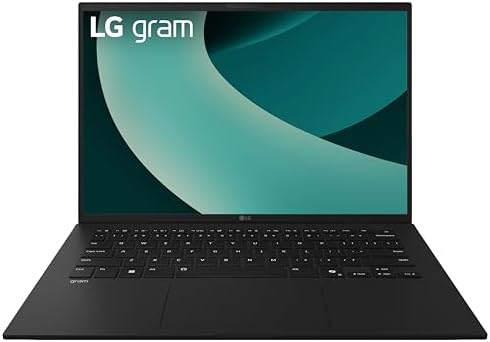
- AI Performance Anywhere – LG gram delivers powerhouse AI performance in an ultra-thin, ultra-light design. Weighing just…
- Welcome to Copilot on Windows 11 Home – Windows 11 Home brings you closer to what you love. Pursue your passions and max…
- Hybrid AI: On-Device and Cloud Synergy – LG gram now includes a hybrid AI solution that blends on-device intelligence wi…
Weighing under 2.2 pounds, the LG Gram Pro 14 2024 occupies a genuinely rare space in the creative market. It delivers enough processing headroom for demanding design workflows without penalizing commuters or frequent travelers. For interface and experience designers who spend hours moving between client meetings, coffee shops, and studio desks, that balance between portability and capability is rarely this well-resolved.
The Intel Core Ultra processor inside handles multitasking across Figma, Adobe XD, and Illustrator without meaningful hesitation. Designers juggling multiple artboards, component libraries, and browser-based prototyping tools will appreciate the responsiveness. The 32GB LPDDR5 memory configuration gives ample breathing room for keeping reference materials, design systems, and communication tools open simultaneously without workflow interruptions.
Display quality deserves particular attention for anyone evaluating this machine for visual work. The 14-inch OLED panel renders colors with exceptional depth and contrast, making it genuinely useful for evaluating UI color palettes and accessibility contrast ratios. OLED technology also delivers true blacks, which matters when reviewing dark-mode interface designs or judging subtle gradient transitions across component states.
Battery endurance is where the Gram Pro 14 continues to differentiate itself from heavier creative alternatives. LG’s engineering priority around efficiency means designers can work through full project days without hunting for outlets. The slim chassis does limit thermal headroom under extended sustained loads, which is worth considering for engineers running heavy asset exports or large prototype renders regularly.
Designers who prioritize portability above all else, and who do the majority of their work inside browser-based or vector-focused tools, will find this machine genuinely compelling. The combination of featherweight construction, a visually accurate display, and capable processing makes it one of the more thoughtfully balanced ultraportables for creative professionals. Those requiring a dedicated GPU for motion design or 3D prototyping work should evaluate alternatives with stronger graphics capabilities.
What We Loved
✅ Exceptionally lightweight chassis ideal for designers who travel frequently
✅ OLED display with rich color depth suited for UI palette and contrast evaluation
✅ 32GB memory configuration handles multitasking across multiple design tools smoothly
✅ Intel Core Ultra processor delivers responsive performance for vector and prototyping workflows
✅ Outstanding battery endurance reduces dependence on charging during full workdays
✅ Slim, premium build quality that projects professionalism in client-facing environments
What We Liked Less
❌ Limited thermal headroom under sustained heavy loads may affect intensive export or render tasks
❌ Integrated graphics insufficient for motion design or 3D UI prototyping workflows
10. Acer Swift X 16 2024 – Best Value OLED with Discrete GPU for Mid-Level Designers

- Ready, Set Go!: Say hi to the all-new Swift Go—your AI ready laptop featuring the latest Intel Core Ultra 9 processor 18…
- Unlock New AI experiences: Whether you’re working, creating, or playing, get the best of Intel Core Ultra 9 processor 18…
- Indulge Your Eyes: The Swift Go 16-inch WUXGA (1920 x 1200) IPS display with 100% sRGB offers vivid color accuracy, rema…
Acer’s Swift X line has long occupied an interesting space in the creator laptop market, and the 2024 edition pushes that positioning further with a 16-inch OLED display that genuinely reshapes how interface work feels on screen. Rich contrast, deep blacks, and wide color coverage make Figma layouts and design system components appear with a clarity that smaller, lower-quality panels struggle to match. For UI and UX practitioners spending hours refining visual hierarchies, that display advantage compounds over time.
The OLED panel ships factory-calibrated for wide color gamut coverage, which matters considerably when evaluating brand palettes, accessibility contrast ratios, and component states side by side. Zooming into typography spacing or icon grid alignment on this display reveals detail that IPS alternatives frequently obscure. The screen real estate at 16 inches also affords designers room to keep their canvas, layers panel, and properties inspector open simultaneously without constant window juggling.
Under the hood, AMD Ryzen processor options paired with dedicated NVIDIA graphics give the Swift X 16 enough muscle to handle Figma, Adobe XD, Illustrator, and Photoshop without noticeable sluggishness during complex operations. Prototyping flows with multiple connected frames and embedded components render smoothly. The discrete GPU also accelerates After Effects previews and motion graphics exports, which matters for designers whose workflow occasionally extends into interaction or micro-animation territory.
Portability deserves acknowledgment here. At 16 inches, the chassis sits at the boundary between portable and desk-bound, and buyers should weigh that honestly. Daily commuters carrying the Swift X 16 alongside accessories will feel its presence in a bag more than they might with a 14-inch alternative. Battery endurance is reasonable for moderate workloads but drops noticeably under sustained rendering or export tasks, making a power adapter a practical companion during full production days.
Designers who want OLED display quality, dedicated graphics, and a generous canvas without moving into premium workstation pricing will find the Swift X 16 a compelling option. It suits freelancers and mid-level professionals whose workflow spans visual design, light motion work, and prototyping. Those who prioritize featherweight portability or need color-critical print production accuracy from a factory-calibrated workflow display may want to evaluate alternatives at higher price points before committing.
What We Loved
✅ 16-inch OLED display with wide color gamut coverage ideal for interface design work
✅ Dedicated NVIDIA graphics accelerate rendering, exports, and motion previews
✅ Generous screen real estate keeps design tools and canvases simultaneously visible
✅ AMD Ryzen processing handles multi-application creative workflows without sluggishness
✅ Competitive price positioning relative to OLED creator laptops in this display size
✅ Strong contrast and deep blacks improve visual hierarchy evaluation on screen
What We Liked Less
❌ 16-inch chassis adds noticeable weight for designers commuting daily with a full kit
❌ Battery life shortens considerably under sustained rendering or export workloads
Continue Reading: Professional Design Laptops
Buying Tips for the Best Laptop for UI UX Designer
Display Quality: The Non-Negotiable Foundation
For UI and UX designers, display accuracy is not a luxury feature. Every color decision, gradient evaluation, and accessibility contrast check depends on what the screen renders faithfully. A panel that shifts hues under different lighting conditions introduces errors that only surface after handoff, at the worst possible moment.
OLED technology has become the benchmark for creative display work in this category. Deep blacks, vivid color reproduction, and high contrast ratios make subtle UI states and dark-mode interface components far easier to evaluate. PANTONE Validation or factory calibration credentials indicate that the manufacturer has verified color accuracy against a professional standard.
Color gamut coverage is the specification that matters most. Look for displays covering at least 100% of the DCI-P3 color space. Broader coverage means design decisions made on your screen will translate more faithfully to other calibrated devices, client presentations, and development handoff environments.
Processor Performance for Creative Multitasking
Design workflows rarely involve just one application. Figma, Adobe XD, Sketch, a browser filled with reference tabs, and a communication platform typically run simultaneously. The processor must handle that concurrent load without hesitation, particularly during export-heavy phases or rapid prototype iteration cycles.
Multi-core processing headroom matters more than single-core peak speed for sustained creative work. Designers who regularly export layered assets, render prototype animations, or run multiple high-resolution artboards concurrently will notice the difference between adequate and genuinely capable processing platforms.
Thermal management determines whether that performance is sustainable. A processor that throttles after ten minutes of sustained load is less useful than a slightly slower chip that maintains consistent output across an entire working session. Evaluate how a machine handles extended workloads, not just burst performance benchmarks.
Portability Versus Screen Real Estate
The 14-inch versus 16-inch decision is one of the most consequential choices in this category. Smaller displays keep total weight under two kilograms, making daily commutes and client visits significantly more comfortable. But compact screens demand more window management, which slows down designers who prefer keeping canvas, layers panel, and properties inspector visible simultaneously.
A 16-inch chassis provides genuine workspace advantages for designers who frequently work across multiple open panels. The additional surface area reduces constant toggling between tool windows and helps maintain spatial awareness across complex design files. The trade-off is a heavier bag and reduced battery endurance under comparable workloads.
The right answer depends entirely on your typical working location. Designers anchored primarily to a studio setup with external monitors can prioritize processing capability and display quality over chassis size. Designers who spend significant time offsite benefit more from a lighter, travel-optimized form factor.
GPU Requirements: Integrated Versus Discrete Graphics
Most UI and UX workflow tasks run efficiently on integrated graphics. Figma, Sketch, and Adobe XD do not require dedicated GPU acceleration for standard prototyping and vector work. Designers whose workflow stays within those boundaries will find integrated solutions perfectly adequate for daily creative output.
Discrete GPU capability becomes relevant when workflows extend into motion design, micro-animation previews, After Effects exports, or lightweight 3D UI prototyping. In those scenarios, dedicated graphics accelerate render times and maintain preview frame rates that integrated solutions cannot match under sustained load. Designers should assess honestly how frequently these tasks appear in their actual workflow.
Buyers who pay a significant premium for a discrete GPU they rarely activate are effectively subsidizing performance they will never use. Conversely, designers who consistently push into GPU-intensive territory will experience real productivity losses without dedicated graphics acceleration available when deadlines are tight.
Battery Life and Workflow Continuity
Battery endurance shapes how much of your working environment travels with you. A laptop that demands a charger by midday forces compromises during offsite collaboration, client presentations, and extended creative sprints in locations without reliable power access. That dependency has genuine professional consequences.
Designers working primarily from a single desk can tolerate shorter battery life more easily. Mobile professionals who shift between co-working spaces, studio environments, and client offices need a machine that covers a realistic full working day without interruption. OLED displays and discrete GPUs both reduce endurance noticeably under load.
Evaluate battery claims against your actual workflow intensity. Manufacturer estimates typically reflect light usage conditions. Design-specific workloads involving complex file operations, animated prototype previews, and simultaneous cloud sync will drain a battery considerably faster than generic productivity benchmarks suggest.
Connectivity and Peripheral Ecosystem
UI and UX designers depend on peripherals that vary significantly by workflow stage. External monitors support multi-breakpoint design reviews. Drawing tablets improve precision during wireframing and annotation phases. Docking stations keep studios organized with consistent peripheral access. Port selection determines whether those tools connect seamlessly or require adapter workarounds.
Thunderbolt 4 is the connectivity standard that matters most for creative professionals. It supports high-bandwidth external displays, fast storage access, and capable docking station integration through a single cable. Designers running dual-monitor setups or connecting high-resolution external panels should confirm Thunderbolt 4 availability before purchasing.
USB-A availability also deserves attention. Many established design peripherals, including drawing tablets and legacy input devices, rely on USB-A connections. Machines that omit USB-A entirely shift the connector burden to adapters, which adds friction during client visits and offsite working sessions where adapter organization becomes a distracting overhead.
Budget Allocation and Long-Term Value
The price range for capable UI and UX design laptops spans from mid-tier to premium workstation territory. Budget positioning should reflect actual workflow demands rather than aspirational specifications. Overspending on GPU capability or display resolution beyond what your tools can leverage produces no creative benefit.
Display quality is the specification category where budget compression causes the most tangible daily impact. A less accurate display introduces color uncertainty that affects every creative decision made on that screen. Investing more in a well-calibrated, high-gamut panel typically delivers more immediate professional benefit than equivalent spending on marginal CPU upgrades.
Long-term value also depends on build quality and upgrade potential. Machines with premium chassis construction and memory configurations that match demanding creative workloads will remain capable partners across longer replacement cycles. Buying for your workflow two years from now, not just your current project demands, generally produces better purchasing outcomes.
Frequently Asked Questions
Do UI and UX designers need a laptop with a dedicated GPU?
No. Most standard UI and UX tasks run well on integrated graphics. Tools like Figma, Sketch, and Adobe XD do not require discrete GPU acceleration for vector work or prototyping. Designers who regularly work with motion graphics, After Effects exports, or lightweight 3D UI elements will benefit more meaningfully from dedicated graphics.
Is a 14-inch laptop large enough for professional UI and UX design work?
Yes. A 14-inch display is workable for professional design work, especially when connected to an external monitor in a studio. Many experienced designers prefer the portability of a compact chassis for client visits and collaborative sessions. The practical limitation emerges when working without an external display across multiple open tool panels.
How much RAM do I need for a UI and UX design laptop?
For most professionals, 16GB is a functional minimum, but 32GB becomes increasingly important as design files grow in complexity. Keeping Figma, a browser with multiple tabs, communication tools, and asset libraries open simultaneously puts meaningful pressure on available memory. Designers managing large component libraries or design systems at scale will notice the difference clearly.
Does display color gamut coverage actually matter for interface design?

Yes. Color gamut coverage determines how accurately your screen reproduces the colors you specify in your design tools. A display that covers 100% of the DCI-P3 space renders interface palettes, gradients, and component states with far greater reliability. That accuracy reduces the risk of color decisions that look correct on your screen but shift unexpectedly in other contexts.
Should I prioritize battery life or processing power when buying a design laptop?
That depends entirely on your working environment. Studio-based designers with consistent power access can reasonably prioritize processing capability. Designers who work heavily offsite, commute frequently, or present client work from remote locations should treat battery endurance as a primary selection criterion. A powerful machine that needs constant charging becomes a liability away from a desk.
Are OLED displays worth the premium for UI and UX professionals?
Yes. OLED panels deliver deeper blacks, richer contrast, and more accurate color reproduction than comparable IPS alternatives. For designers evaluating dark UI themes, subtle gradients, and accessibility contrast ratios, those differences are visible and professionally meaningful. The premium is generally justified for anyone whose daily work depends on confident, accurate on-screen color evaluation.
Can I use a 2-in-1 or tablet-style laptop for serious UI and UX design work?
Yes. Tablet-laptop hybrid devices support wireframing, annotation, and client presentations effectively, particularly when paired with a stylus that offers low latency and pressure sensitivity. The trade-off involves keyboard stability during extended typing sessions and the additional cost of accessory-dependent input. Designers who sketch initial concepts by hand benefit most from this format.
How important is keyboard quality for UI and UX designers?
Keyboard quality is more important than many designers initially expect. Extended sessions involving documentation, annotation, content writing, and client correspondence accumulate significant typing volume. Shallow keyboards with poor travel increase fatigue over long working days. A deliberate, well-spaced keyboard with measured key travel directly supports the sustained concentration that complex design projects demand.
Conclusion
Matching a laptop to a UI and UX workflow requires honest self-assessment. Display accuracy, portability, processing endurance, and GPU capability each carry different weight depending on how and where you work. No single specification profile suits every designer. Prioritize the dimensions of performance that your actual daily workflow demands, rather than chasing specifications that benchmark impressively but contribute little to real creative output. Budget should follow genuine need, with display quality deserving the highest protection against cost compression. For professionals who require the strongest combination of color-critical display performance, sustained processing capability, and reliable portability, the Apple MacBook Pro 14-inch M4 Max represents the most compelling all-around choice in this category.