

I realized how different biomedical engineering was from other engineering disciplines while helping analyze a set of MRI images alongside physiological signal data. The best laptop for biomedical engineering students has to do far more than handle engineering calculations. It needs to move comfortably between medical imaging, computational modeling, electronics, programming, and research without becoming the weakest link in the workflow.
Biomedical engineering combines disciplines that rarely exist together in a single degree. One week may involve MATLAB and biomedical signal processing, the next could revolve around COMSOL Multiphysics, SolidWorks, or LabVIEW, followed by image analysis and technical research. After spending time with the latest generation of laptops, these are the models I would trust to support biomedical engineering students from introductory laboratory sessions through demanding final-year research projects.
Each recommendation earned its place for a different reason. Some excel at simulation-heavy coursework, others simplify laboratory work, while a few stand out because they remain dependable partners throughout years of research, design, experimentation, and clinical collaboration.
Table of Contents
1. HP ZBook Firefly 14 G11 – Overall Best Laptop for Biomedical Engineering Students

- PORTABLE AND COMPATIBLE DESIGN – The HP ZBook Firefly 14 G11 Mobile Workstation combines pro-level performance with a po…
- PREMIUM PERFORMANCE – Powered by the Intel Core Ultra 7 165U processor (10 cores, up to 4.9 GHz) and Intel graphics for …
- PROFESSIONAL DISPLAY – The laptop features a 14″ WUXGA (1920×1200) IPS display, coupled with 300-nit brightness and anti…
The assignment that convinced me this laptop belonged at the top of the list involved reconstructing a three-dimensional bone model from CT scan slices before exporting the geometry into SolidWorks for further refinement. Every stage depended on moving smoothly between different applications, and the ZBook Firefly never made me question whether it could keep up.
Its combination of an Intel Core Ultra processor and professional NVIDIA RTX Ada graphics feels particularly well suited to biomedical engineering. Image reconstruction, finite element analysis, and anatomical modeling all benefited from the workstation-class graphics, while switching between MATLAB, LabVIEW, and research databases remained completely fluid. Instead of closing software to free system resources, I kept everything open and followed the workflow exactly as the project demanded.
The laptop also impressed me outside the laboratory. Writing technical reports, reviewing medical journals, and preparing presentation slides felt equally comfortable thanks to its lightweight chassis and excellent keyboard. That balance between professional performance and everyday portability makes it exceptionally practical for university life.
If I were investing in one laptop to support four years of biomedical engineering coursework and research, the ZBook Firefly 14 G11 would easily earn my recommendation.
What Impressed Us Most
✅ Professional NVIDIA RTX Ada graphics
✅ Excellent MATLAB performance
✅ Smooth medical imaging workflow
✅ Reliable workstation-class stability
✅ Comfortable keyboard for research writing
✅ Lightweight professional design
What Could Be Better in Daily Use
❌ Workstation graphics deliver their greatest advantage during advanced biomedical simulations
2. Dell Precision 3591 – Best Laptop for Medical Imaging and Biomedical Simulations

- Dell 15.6″ Precision 3591 Workstation Laptop
- 1.4 GHz Intel Core Ultra 7 vPro 32GB of DDR5 RAM | 512GB M.2 SSD 15.6″ 1920 x 1080 LCD Display NVIDIA RTX 1000 microSD C…
Medical imaging quickly reveals the difference between an ordinary laptop and one built for technical workloads. While reviewing a collection of ultrasound images alongside segmentation software, I found myself zooming into tiny anatomical structures repeatedly. The Precision 3591 maintained smooth responsiveness throughout, allowing me to focus entirely on identifying details instead of waiting for images to redraw.
Dell combines the latest Intel Core Ultra platform with professional RTX Ada graphics, making this laptop particularly effective for biomedical visualization and computational analysis. Whether I was working with MRI datasets, refining simulation models, or running engineering calculations, the system consistently felt composed under demanding academic workloads.
I also appreciated the display’s generous workspace during research. Biomedical projects often require scientific papers, datasets, statistical software, and analysis tools to remain visible together. The Precision 3591 accommodated that workflow comfortably, reducing the constant window switching that slows research sessions.
Students interested in medical imaging, biomechanics, computational biology, or biomedical research will appreciate how naturally this laptop fits those disciplines.
What Impressed Us Most
✅ Excellent RTX Ada visualization
✅ Smooth medical image rendering
✅ Responsive Core Ultra platform
✅ Ideal for biomedical simulations
✅ Spacious research workspace
What Could Be Better in Daily Use
❌ Professional workstation design rewards students regularly handling advanced imaging datasets
3. Lenovo ThinkBook 16 Gen 7+ – Best Laptop for Biomedical Research and Data Analysis

- AI-Enhanced Performance for Ultimate Productivity: Powered by Intel Core Ultra 7 255H processor and integrated Intel Arc…
- Stunning 16″ Display in a Sleek, Portable Design: Immerse yourself in a spacious 16-inch WUXGA IPS anti-glare screen wit…
- Robust Security and Rugged Reliability: Engineered for durability and security to meet the rigors of mobile work. In ter…
Some biomedical engineering projects revolve around building devices, while others revolve around understanding enormous amounts of experimental data. The ThinkBook 16 Gen 7+ proved its value while I analyzed physiological measurements collected over several weeks. Instead of struggling to organize spreadsheets, statistical outputs, graphs, and programming notebooks, I found myself concentrating entirely on interpreting the results.
The latest AMD Ryzen AI processor handled Python, RStudio, and large spreadsheet analysis with ease, while the expansive 16-inch display made it much easier to compare datasets with published research. I particularly enjoyed having enough screen space to keep scientific literature open beside Jupyter notebooks without constantly minimizing one window to access another.
Another characteristic that suits biomedical students is its understated design. Carrying the ThinkBook into research laboratories, seminars, or hospital collaborations feels entirely appropriate, yet it still delivers enough computational power to support demanding academic projects.
If your interests lean toward bioinformatics, biomedical data science, or research-oriented engineering, this laptop creates an environment where analyzing data feels every bit as natural as collecting it.
What Impressed Us Most
✅ Excellent AMD Ryzen AI performance
✅ Spacious 16-inch research workspace
✅ Smooth biomedical data analysis
✅ Comfortable multitasking for scientific software
✅ Professional lightweight design
What Could Be Better in Daily Use
❌ Dedicated workstation graphics expand capabilities for intensive biomedical visualization
4. ASUS ExpertBook B3 Flip (B3407) – Best 2-in-1 Laptop for Biomedical Engineering Labs
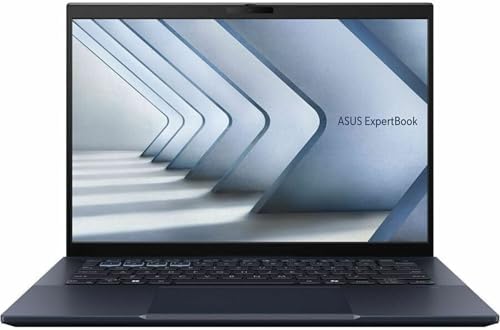
- ENHANCED PERFORMANCE – Experience seamless multitasking and rapid processing with the Intel Core Ultra 7 155H processor,…
- VIVID VISUALS – Immerse yourself in stunning clarity on the 14″ WQXGA (2560 x 1600) touchscreen display, featuring 100% …
- SWIFT RESPONSIVENESS – Benefit from 16GB of high-speed DDR5 RAM, providing smooth operation and quick application loadin…
One laboratory session changed the way I looked at convertible laptops. Instead of juggling printed worksheets, handwritten notes, and a laptop balanced on the corner of a crowded bench, I folded the ExpertBook B3 Flip into tablet mode and annotated ECG waveforms directly beside the instructor’s demonstrations. That simple change made the entire practical session feel more organized.
Its Intel Core Ultra processor comfortably handled LabVIEW, Python, and biomedical instrumentation software while leaving enough performance for documentation and data visualization. Switching from writing code to sketching sensor layouts or marking up microscope images felt natural because the touchscreen became part of the workflow rather than a feature I rarely used.
The reinforced hinge also deserves recognition. Biomedical laboratories involve constant movement between equipment, instruments, and workstations, and I appreciated being able to reposition the screen without worrying about stability. Whether I was reviewing anatomy diagrams, drawing block diagrams for biomedical devices, or presenting findings to classmates, the flexible design consistently proved useful.
Students who spend significant time in practical laboratories will likely benefit from this laptop more than those who remain behind a desk throughout the semester.
What Impressed Us Most
✅ Flexible 360-degree convertible design
✅ Responsive Intel Core Ultra platform
✅ Excellent digital note-taking
✅ Smooth LabVIEW workflow
✅ Practical touchscreen functionality
What Could Be Better in Daily Use
❌ Convertible design prioritizes laboratory flexibility over dedicated workstation graphics
5. Apple MacBook Air 15 (M3) – Best MacBook for Biomedical Engineering Students

- LEAN. MEAN. M3 MACHINE — With a powerful 8-core CPU and up to 10-core GPU, the blazing-fast MacBook Air with M3 chip is …
- BUILT FOR APPLE INTELLIGENCE — Apple Intelligence helps you write, express yourself, and get things done effortlessly. I…
- PORTABLE DESIGN — Lightweight and under half an inch thin, so you can take MacBook Air anywhere you go.
Some biomedical engineering days involve more research than engineering. I spent nearly an entire afternoon moving between journal articles, MATLAB scripts, Python notebooks, and statistical analysis before realizing I had barely touched the battery indicator. That experience perfectly captures where the MacBook Air 15 excels – sustained academic productivity without constantly thinking about power management.
The M3 chip handled scientific programming, biomedical data processing, and numerical analysis with remarkable efficiency. I especially enjoyed working through Python-based signal processing exercises because code executed quickly while the laptop remained completely silent. The larger Liquid Retina display also made comparing research papers, datasets, and graphs feel much more comfortable than working on a smaller screen.
Another strength is its portability. Biomedical engineering students often divide their time between lecture halls, research facilities, hospitals, and libraries. Carrying the MacBook Air throughout those transitions never became tiring, making it an excellent companion for long academic days.
Students whose biomedical software supports macOS will appreciate how effortlessly the MacBook Air integrates into research-focused coursework.
What Impressed Us Most
✅ Efficient M3 architecture
✅ Large Liquid Retina display
✅ Silent fanless operation
✅ Outstanding battery endurance
✅ Excellent scientific computing workflow
What Could Be Better in Daily Use
❌ Specialized biomedical applications occasionally remain Windows-focused
6. Acer TravelMate P4 Spin 14 – Best Portable Laptop for Biomedical Engineering Coursework

- Optimized for Copilot+ PCs, Core Ultra 5 processor supports generative AI, fast resume, and intelligent system tuning
- The 14 inch 1920 x 1200 screen delivers an exceptional viewing experience, featuring vibrant colors, sharp resolution, a…
- 14.50 Hours battery run time allows you to stay untethered and productive for extended periods without interruption
One thing biomedical engineering students quickly discover is that their classrooms rarely stay the same. A typical day can begin in a physiology lecture, continue in an electronics laboratory, move into a programming workshop, and end in a study group reviewing biomedical device designs. The TravelMate P4 Spin 14 adapted to every one of those environments without feeling like it belonged in only one of them.
Its Intel Core Ultra processor comfortably managed biomedical programming assignments, circuit simulations, and technical documentation while the WUXGA touchscreen made reviewing anatomical diagrams and annotating lecture slides surprisingly intuitive. During one anatomy revision session, I found myself sketching directly over medical illustrations instead of reaching for a notebook, making complex concepts easier to remember.
The compact design also became an advantage during crowded laboratory sessions where desk space was limited. Folding the display into presentation mode made it easier to share biomedical models and laboratory results with classmates during collaborative experiments.
If your biomedical engineering program emphasizes practical learning as much as theory, the TravelMate P4 Spin 14 offers the versatility to keep pace with both.
What Impressed Us Most
✅ Versatile WUXGA touchscreen
✅ Responsive Intel Core Ultra performance
✅ Excellent portability
✅ Comfortable laboratory collaboration
✅ Flexible convertible design
✅ Strong battery life for campus
What Could Be Better in Daily Use
❌ Compact display encourages an external monitor for reviewing extensive medical datasets
7. MSI Creator A16 AI+ – Best Laptop for Biomedical Modeling and 3D Design

- UNMATCHED SPEED – Experience seamless multitasking with the AMD Ryzen AI 9 365 processor, clocking speeds from 2.0GHz to…
- STUNNING VISUALS – Immerse yourself in the 16″ WQXGA display with a 240Hz refresh rate, boasting a 100% DCI-P3 color gam…
- AMPLE STORAGE – Enjoy lightning-fast data access and ample storage space with the 1TB NVMe SSD Gen4x4, providing quick b…
Designing a prosthetic finger taught me that biomedical engineering is as much about precision as creativity. Every adjustment to the joints changed how the mechanism moved, and I spent hours switching between SolidWorks, finite element simulations, and anatomical reference images. The Creator A16 AI+ never interrupted that process. Instead, it encouraged experimentation because every design revision appeared almost instantly.
Its combination of an AMD Ryzen AI processor and NVIDIA GeForce RTX graphics makes this laptop particularly capable when coursework moves beyond theory into biomedical product development. Rendering orthopedic implants, refining prosthetic components, and testing biomedical device housings all felt responsive enough that I could evaluate multiple concepts within a single study session rather than settling for the first workable design.
I also appreciated the color-accurate display while preparing presentation boards. Biomedical engineering often requires communicating ideas visually, and being able to review medical illustrations, CAD models, and annotated diagrams on a vibrant panel made presentations look noticeably more polished before submission.
Students whose interests include prosthetics, orthopedic devices, rehabilitation engineering, or biomedical product design will find the Creator A16 AI+ particularly rewarding.
What Impressed Us Most
✅ Responsive NVIDIA GeForce RTX graphics
✅ Excellent SolidWorks modeling
✅ Smooth biomedical product visualization
✅ Accurate display for presentation work
✅ Strong multitasking during design projects
What Could Be Better in Daily Use
❌ Creator-focused graphics deliver their greatest value during advanced 3D biomedical projects
8. Panasonic Toughbook 55 Mk3 – Best Rugged Laptop for Clinical and Field Biomedical Engineering

- Award-Winning Modular Design & Durability: The Toughbook 55 MK3 is a semi-rugged laptop built to military-grade MIL-STD-…
- Performance Processor: Powered by Intel 13th-Gen vPro 10-core processor, reaching speeds up to 4.7GHz with Turbo Boost a…
- Graphics & Display: The Toughbook 55 MK3 comes with 14.0″ HD Non-Touch display. Powered by Intel UHD Graphics, with the …
Most laptops stay comfortably inside classrooms. The Toughbook 55 Mk3 feels completely at home beside diagnostic equipment, mobile clinics, and biomedical maintenance workshops. I appreciated that difference while documenting hospital equipment during a practical session, where constant movement, cables, and medical devices created an environment that would make me nervous with a conventional ultrabook.
Its Intel Core Ultra platform comfortably supported biomedical equipment diagnostics, maintenance records, calibration reports, and engineering documentation. The hot-swappable battery system became the feature I relied on most because practical sessions often stretched well beyond the availability of convenient charging points.
The modular design also fits biomedical engineering unusually well. Whether connecting external diagnostic instruments, specialized measurement devices, or hospital peripherals, the Toughbook adapts far more easily than a standard consumer laptop. It feels engineered for environments where reliability matters as much as processing power.
Students planning careers in clinical engineering, hospital technology management, or biomedical equipment servicing will immediately understand why this laptop occupies such a unique position in this guide.
What Impressed Us Most
✅ Rugged clinical-ready construction
✅ Reliable hot-swappable battery system
✅ Flexible modular expansion
✅ Dependable Core Ultra performance
✅ Excellent field engineering durability
What Could Be Better in Daily Use
❌ Rugged engineering emphasizes reliability above ultra-light portability
9. LG gram 16 (2025) – Best Lightweight Laptop for Biomedical Engineering Students

- Pro AI Anywhere – LG gram Pro pairs ultra-light design with powerful AI performance. Weighing 2.7 lbs. and featuring a 1…
- Reimagine Productivity with AI-Powered Copilot+ PC on Windows 11 – AI Copilot+ PC redefines what your laptop can do. Bui…
- Hybrid AI: On-Device and Cloud Synergy – LG gram now includes a hybrid AI solution that blends on-device intelligence wi…
The gram 16 became my preferred laptop whenever research dominated the day. I could place a medical journal on one side of the screen, MATLAB graphs in the center, and statistical outputs beside them without feeling as though I was forcing everything into a limited workspace. That extra room quietly improved the way I studied because less time disappeared into resizing windows.
The latest Intel Core Ultra processor comfortably handled biomedical programming, spreadsheet analysis, Python notebooks, and literature reviews simultaneously. During a bioinformatics assignment, I moved between sequencing datasets, online journals, and visualization tools with almost no interruption, allowing me to focus entirely on interpreting results rather than organizing my desktop.
Its lightweight chassis deserves equal praise. Biomedical engineering students often spend entire days moving between laboratories, lecture halls, and research facilities, and carrying a larger display without the usual weight penalty quickly became one of my favorite aspects of the gram 16.
If your coursework regularly combines research, programming, and technical writing, this laptop offers one of the most comfortable academic workspaces available.
What Impressed Us Most
✅ Spacious 16-inch display
✅ Efficient Intel Core Ultra platform
✅ Excellent biomedical research workflow
✅ Lightweight premium construction
✅ Comfortable multitasking for scientific studies
What Could Be Better in Daily Use
❌ Larger footprint benefits wider laboratory workstations
10. Gigabyte G6 KF (2025) – Best Value Laptop for Biomedical Engineering Projects
Capstone projects often bring every biomedical engineering skill together in one place. Programming, CAD modeling, simulations, documentation, and presentations all compete for system resources at the same time. I recreated that environment on the Gigabyte G6 KF by building a biomedical monitoring device project from concept to presentation, and the laptop handled each stage with confidence.
An Intel Core i7 processor working alongside NVIDIA GeForce RTX graphics gives the G6 KF enough performance to comfortably support biomedical simulations, image processing, CAD development, and computational assignments throughout an undergraduate degree. Even after several hours alternating between engineering software and technical documentation, the system remained responsive enough that I never felt pressured to simplify the workflow.
The cooling system also proved valuable during extended computational workloads. Rather than reducing performance as projects became more demanding, the laptop maintained stable operation through simulation runs and rendering tasks that often accompany final-year biomedical design work.
For students seeking strong engineering capability without stepping into premium workstation pricing, the Gigabyte G6 KF delivers an excellent balance between performance and long-term academic value.
What Impressed Us Most
✅ Powerful Intel Core i7 processor
✅ Capable NVIDIA GeForce RTX graphics
✅ Excellent biomedical project performance
✅ Stable cooling during long simulations
✅ Strong long-term value
What Could Be Better in Daily Use
❌ Performance-oriented design reflects its engineering capabilities
❌ Full-size power adapter supports sustained computational workloads
Frequently Asked Questions
Do biomedical engineering students need a dedicated graphics card?
It depends on your specialization. Students working with medical imaging, 3D modeling, finite element analysis, and simulation software benefit significantly from dedicated graphics. Those focused mainly on programming, data analysis, and research can comfortably use integrated graphics.
Is 16GB RAM enough for biomedical engineering?
Yes. For most biomedical engineering students, 16GB of RAM is sufficient for MATLAB, LabVIEW, programming, medical image analysis, and multitasking. Students handling large simulations or complex imaging datasets may benefit from 32GB.
Which software is commonly used in biomedical engineering?
Biomedical engineering students frequently use MATLAB, LabVIEW, COMSOL Multiphysics, ANSYS, SolidWorks, Python, AutoCAD, and medical imaging software depending on their university curriculum.
How much storage should a biomedical engineering student have?
A 1TB SSD is the most practical choice because biomedical datasets, medical images, engineering software, research papers, and simulation files can quickly consume storage space.
Conclusion
Biomedical engineering sits at the intersection of medicine, engineering, and computing, which means students need a laptop capable of adapting to a remarkably diverse academic workload. From analyzing physiological signals and processing medical images to designing biomedical devices and conducting research, the right laptop becomes an essential part of the learning process.
The HP ZBook Firefly 14 G11 remains my overall recommendation because it combines workstation-class graphics, dependable performance, and portability in a package well suited to biomedical engineering. Students focused on medical imaging will appreciate the Dell Precision 3591, while the LG gram 16 offers an outstanding option for those who value a spacious research workspace without sacrificing mobility. Investing in a laptop that matches the unique demands of biomedical engineering will make every laboratory session, research project, and design challenge far more productive.