
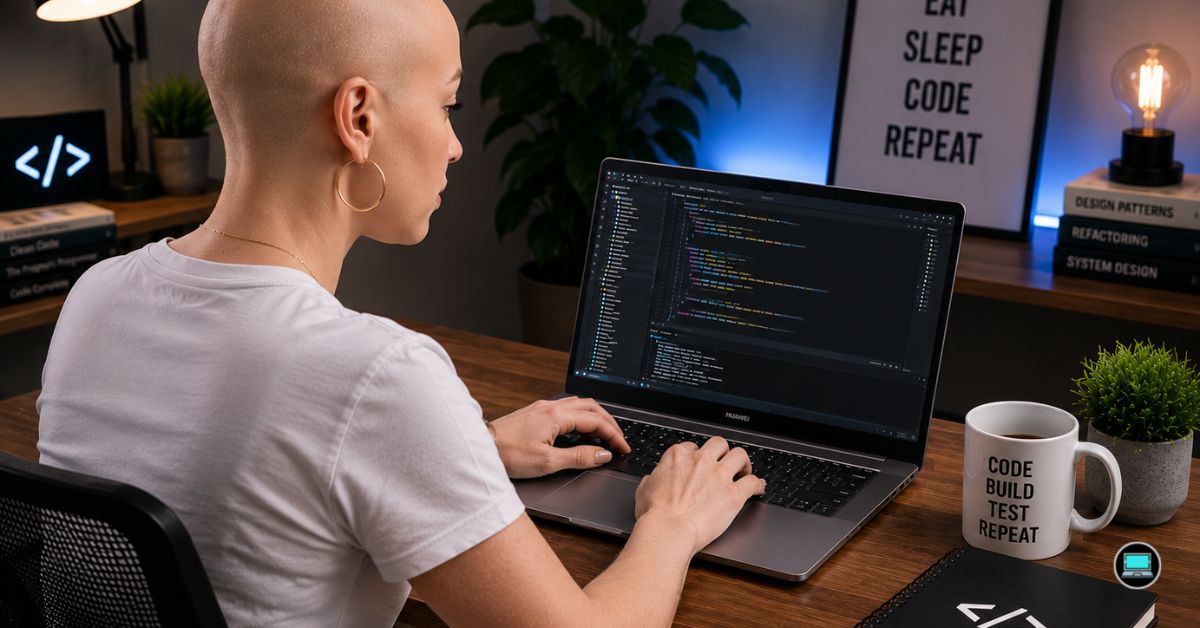
Keyboard comfort, battery life, Linux compatibility, and long-term reliability tend to matter far more to developers than flashy marketing slogans. That reality becomes obvious after spending entire days inside Visual Studio Code, IntelliJ IDEA, Docker, and browser tabs, which is why the best laptop brand for coding and programming often turns out to be the company that consistently delivers a great experience rather than simply the fastest processor.
Over the years, we have written code on everything from ultraportables and workstations to gaming laptops and modular machines. Some brands earned our appreciation because of their keyboards, others because of their battery life, and a few distinguished themselves by making development feel effortless. While individual models come and go, the strengths of an ecosystem often remain remarkably consistent.
Table of Contents
1. Lenovo – Overall Best Laptop Brand for Coding and Programming
Few companies have earned as much goodwill among programmers as Lenovo. Whether we were debugging applications, running Docker containers, or spending entire weekends inside Visual Studio Code, Lenovo machines repeatedly delivered the kind of experience that made us forget about the hardware and focus entirely on the code.
The first thing we consistently appreciated was the keyboard. Even after years of testing laptops from virtually every major manufacturer, Lenovo’s typing experience remains one of the standards against which we measure everyone else. Long coding sessions felt comfortable, key travel inspired confidence, and fatigue rarely became an issue.
The breadth of Lenovo’s lineup is another major advantage. ThinkPads, Yoga models, Legion gaming systems, and workstation-class machines ensure that virtually every type of developer can find something appropriate. Students, web developers, AI engineers, and enterprise programmers all have strong options available.
Linux compatibility has traditionally been another strength. Ubuntu and other distributions generally behave well on Lenovo hardware, making the brand particularly attractive to developers who prefer open-source environments. Thermals are also consistently well-managed across much of the lineup, allowing machines to sustain performance during heavy compile sessions.
Perhaps the biggest reason Lenovo occupies the top spot is consistency. Individual laptops naturally vary, but the overall ecosystem repeatedly delivers a dependable experience.
What Impressed Us Most
✅ Industry-leading keyboards
✅ Excellent Linux compatibility
✅ Broad product lineup
✅ Reliable thermal management
✅ Strong reputation among developers
Issues We Encountered
❌ Premium ThinkPad models can become expensive
❌ Some consumer models have weaker displays than competitors
2. Apple – Best for Developers in the Apple Ecosystem
Battery anxiety almost disappeared when we transitioned to modern Apple Silicon machines. Few experiences in computing are as liberating as leaving home in the morning and returning at night without ever thinking about the charger.
Apple’s hardware-software integration remains one of its greatest strengths. Xcode, Terminal, Docker, and countless Unix-based tools feel wonderfully at home on macOS. Performance efficiency is particularly impressive. Even under sustained workloads, MacBooks remain quiet and remarkably cool compared with many competing laptops.
Display quality also deserves recognition. Spending ten hours a day reading code, reviewing documentation, and attending meetings becomes significantly easier when the screen is this good. The keyboards and trackpads consistently rank among the best available, contributing to an experience that feels exceptionally polished.
Battery life remains perhaps the biggest advantage. During travel, conferences, and remote work, Apple’s machines repeatedly demonstrated why they have become favorites among software engineers.
However, not every workflow fits comfortably within the Apple ecosystem. Certain enterprise tools, legacy software, and gaming requirements can still favor Windows machines.
What Impressed Us Most
✅ Incredible battery life
✅ Outstanding efficiency
✅ Exceptional displays
✅ Superb trackpads and keyboards
✅ Excellent Unix-based development environment
Issues We Encountered
❌ Limited upgradeability
3. Dell – Best for Professional Software Developers
Corporate environments have a habit of revealing whether a laptop brand truly understands productivity, and Dell has spent decades refining that experience. Throughout our testing, Dell repeatedly impressed us with the maturity of its ecosystem.
Latitude, XPS, Precision, and Alienware families provide a remarkable amount of flexibility. Whether we needed a lightweight travel machine, a workstation, or something capable of running multiple virtual machines, Dell almost always had a suitable option.
Keyboard quality consistently ranged from good to excellent, while display options often ranked among the best in the Windows ecosystem. Long hours spent inside IntelliJ IDEA, Visual Studio, and database tools never felt uncomfortable.
Dell’s business-oriented support network also deserves praise. Enterprise users, consultants, and professional developers often appreciate the availability of replacement parts, docking solutions, and configuration choices.
The overall experience felt professional rather than flashy, and that is exactly what many developers prefer.
What Impressed Us Most
✅ Excellent business ecosystem
✅ Strong display quality
✅ Wide selection of machines
✅ Good keyboard experience
✅ Reliable professional support
Issues We Encountered
❌ Quality control can occasionally vary
❌ Premium models command high prices
4. HP – Best for Students and Everyday Programmers
Not every programmer needs a workstation or a premium ultrabook. Sometimes the ideal machine is simply the one that disappears into the background and lets you focus on solving problems instead of managing the hardware. That balance is where HP has quietly built a strong reputation.
What impressed us most about HP was the sheer breadth of its lineup. EliteBooks, ProBooks, OmniBooks, ZBooks, and even Victus models provide enough variety to satisfy everyone from computer science students to professional software engineers. During our testing, we consistently found at least one HP family that excelled in almost every use case.
Keyboard comfort also deserves recognition. Spending hours inside Visual Studio Code, IntelliJ IDEA, and terminals rarely resulted in fatigue. Battery life on many modern HP machines proved equally impressive, making them excellent companions for lectures, meetings, and remote work.
HP may not possess the cult following enjoyed by some competitors, but the overall ecosystem feels dependable and approachable.
What Impressed Us Most
✅ Broad range of laptops
✅ Comfortable keyboards
✅ Strong battery life
✅ Excellent student options
✅ Reliable overall experience
Issues We Encountered
❌ Consumer models vary significantly in display quality
❌ Software preinstallation can occasionally feel excessive
5. ASUS – Best for Performance and Value
Developers working with virtual machines, AI frameworks, and demanding workloads quickly learn that raw horsepower still matters. That realization repeatedly highlighted the strengths of ASUS during our testing.
The company offers an impressive mix of Zenbook, Vivobook, ProArt, ROG, and TUF models. Whether we were experimenting with local LLMs, running Docker containers, or compiling large projects, ASUS systems consistently delivered excellent performance for the hardware on offer.
Displays have become another major strength. OLED panels and high-refresh screens transformed long coding sessions into a far more enjoyable experience. Thermal management on higher-end models also proved reassuringly capable.
Perhaps what impressed us most was versatility. ASUS seems equally comfortable building ultraportables, creator laptops, and machines designed for AI development.
What Impressed Us Most
✅ Excellent performance
✅ Beautiful display options
✅ Strong AI and virtualization capabilities
✅ Diverse lineup
✅ Good value across multiple categories
Issues We Encountered
❌ Keyboards are not always class-leading
6. Framework – Best for Upgradeability
Most laptops are designed to be replaced. Framework took the opposite approach, and after spending time with the ecosystem, we came away genuinely impressed by how refreshing that philosophy feels.
Repairability and modularity remain the defining characteristics. Storage, memory, ports, and even motherboards can be upgraded over time, allowing developers to extend the lifespan of their machines rather than replacing them entirely.
Linux compatibility is another major advantage. Ubuntu, Fedora, and Arch Linux all feel remarkably comfortable on Framework hardware, making the brand particularly appealing to enthusiasts and open-source developers.
The keyboard and display quality proved better than we initially expected, and the company’s commitment to sustainability added another layer of appeal.
Framework may not be the right choice for everyone, but for developers who enjoy controlling their hardware, few brands offer a comparable experience.
What Impressed Us Most
✅ Outstanding upgradeability
✅ Excellent Linux support
✅ Modular design philosophy
✅ Sustainable approach
✅ Strong community support
Issues We Encountered
❌ Smaller ecosystem than established manufacturers
❌ Availability can vary by region
7. Microsoft – Best Premium Windows Experience
Hardware and software integration often determines how enjoyable a laptop feels over the long term, and Microsoft understands that relationship better than most. Surface devices consistently delivered an experience that felt polished and refined.
Displays remain one of the biggest highlights. Long hours spent reviewing code, reading documentation, and attending meetings became noticeably easier thanks to Microsoft’s excellent screens. The keyboards and trackpads also ranked among the strongest in the Windows ecosystem.
Battery life and portability proved equally impressive. Surface laptops excelled during travel and remote work, while Windows itself naturally integrates perfectly with Microsoft’s hardware.
For developers who appreciate elegant design and a clean software experience, Microsoft remains one of the strongest choices available.
What Impressed Us Most
✅ Premium build quality
✅ Excellent displays
✅ Great keyboards and trackpads
✅ Strong battery life
✅ Clean Windows experience
Issues We Encountered
❌ Upgradeability remains limited
❌ Port selection can be restrictive
8. Acer – Best for Budget-Conscious Programmers
Not every developer begins with a flagship machine, and our experience over the years has shown that Acer understands that reality better than most manufacturers. The company has consistently built laptops that deliver enough performance for coding without forcing students and aspiring developers into premium price brackets.
The breadth of Acer’s lineup deserves recognition. Swift, Aspire, Nitro, and Predator models cover a surprising range of users. Whether we were working inside Visual Studio Code, experimenting with Python, or running Docker containers, Acer machines generally provided more capability than we initially expected.
Battery life and portability varied across the lineup, but many recent Swift models proved particularly enjoyable to carry around. We also appreciated Acer’s willingness to adopt modern hardware quickly, allowing developers access to newer processors without waiting for flagship pricing to fall.
What impressed us most was accessibility. Acer makes programming approachable for students and hobbyists who simply need a reliable machine to learn and grow.
What Impressed Us Most
✅ Excellent entry-level options
✅ Broad product range
✅ Good performance for everyday coding
✅ Strong student appeal
✅ Competitive hardware offerings
Issues We Encountered
❌ Build quality varies across product lines
❌ Keyboards are not as refined as Lenovo or Apple
9. MSI – Best for Heavy Workloads
Compiling large projects, running multiple virtual machines, and experimenting with AI frameworks can quickly overwhelm ordinary laptops. Those scenarios repeatedly highlighted MSI’s strengths during our testing.
Gaming heritage works heavily in MSI’s favor. Raider, Stealth, Vector, and Creator series machines consistently delivered the thermal headroom necessary for demanding workloads. Docker containers, Android Studio, local LLMs, and machine learning experiments all benefited from the abundant CPU and GPU resources available.
Display quality has improved considerably over the years, and recent MSI models proved surprisingly comfortable for long coding sessions. The company also deserves credit for embracing powerful hardware configurations that appeal to engineers, AI researchers, and advanced users.
MSI may not always prioritize elegance, but it excels at delivering sheer capability.
What Impressed Us Most
✅ Exceptional performance potential
✅ Excellent thermals
✅ Strong AI and machine learning capability
✅ Powerful hardware configurations
✅ Great for virtualization workloads
Issues We Encountered
❌ Battery life generally trails ultraportable brands
❌ Larger models sacrifice portability
10. Samsung – Best for Portability and Battery Life
Some laptops earn their place through raw power. Samsung reached our top ten because of something much simpler: comfort. Few brands combine portability, display quality, and battery efficiency as elegantly as Samsung.
Galaxy Book models repeatedly impressed us during travel and remote work. Lightweight designs, beautiful AMOLED displays, and excellent battery life transformed everyday coding into a surprisingly pleasant experience. Writing code for hours inside VS Code or IntelliJ rarely felt tiring.
Another advantage lies in Samsung’s ecosystem. Developers already using Galaxy phones and tablets will appreciate the seamless connectivity between devices. File sharing, multitasking, and continuity features all contributed to a cohesive experience.
Although Samsung machines are not typically associated with extreme performance, they excel in the kind of mobility-focused workflows many modern programmers increasingly value.
What Impressed Us Most
✅ Outstanding portability
✅ Excellent battery life
✅ Beautiful AMOLED displays
✅ Seamless Galaxy ecosystem integration
✅ Comfortable everyday experience
Issues We Encountered
❌ Fewer workstation-class options
Frequently Asked Questions
Which laptop brand is best for coding and programming?
Lenovo earned the top position because of its exceptional keyboards, broad lineup, Linux compatibility, and consistently strong reputation among developers.
Is Apple better than Windows for programming?
Neither platform is universally superior. Apple excels in battery life, efficiency, and Unix-based development, while Windows offers greater hardware variety and compatibility with specialized tools.
Which brand offers the best keyboards?
Lenovo remains the benchmark for typing comfort, although Apple, Dell, HP, and Microsoft also provide excellent experiences.
What brand do software engineers use most?
Lenovo, Apple, Dell, and HP are among the most commonly used brands in professional environments because of their reliability and extensive ecosystems.
Is ASUS good for programming?
Yes. ASUS offers excellent hardware performance, beautiful displays, and strong options for AI development, virtualization, and heavy multitasking.
Which laptop brand is best for Linux users?
Framework and Lenovo stood out the most during our experience. Both brands provide excellent Linux compatibility and enjoy strong support within the open-source community.
Conclusion
A great programming laptop is about far more than benchmark numbers. Comfort, battery life, thermal behavior, reliability, and ecosystem support often matter far more after thousands of hours spent writing code.
Lenovo ultimately delivered the most balanced experience, but the ideal brand depends heavily on the type of developer you are. Apple remains exceptionally compelling for those invested in macOS, Dell excels in professional environments, and Framework offers a refreshing vision of repairability and long-term ownership.
Perhaps the most interesting takeaway from our years of testing is that the best brands are not necessarily the ones chasing headlines. They are the companies that consistently make it easier to focus on the code itself, which is ultimately what every developer wants.